📦 Free Delivery on Linen & Decor: Orders over R1,999 (Gauteng) | Over R2,999 (Rest of SA) 🚛 Premium Furniture Delivery: Gauteng Flat Rate R1,500 | Nationwide Shipping Available
📦 Free Delivery on Linen & Decor: Orders over R1,999 (Gauteng) | Over R2,999 (Rest of SA) 🚛 Premium Furniture Delivery: Gauteng Flat Rate R1,500 | Nationwide Shipping Available
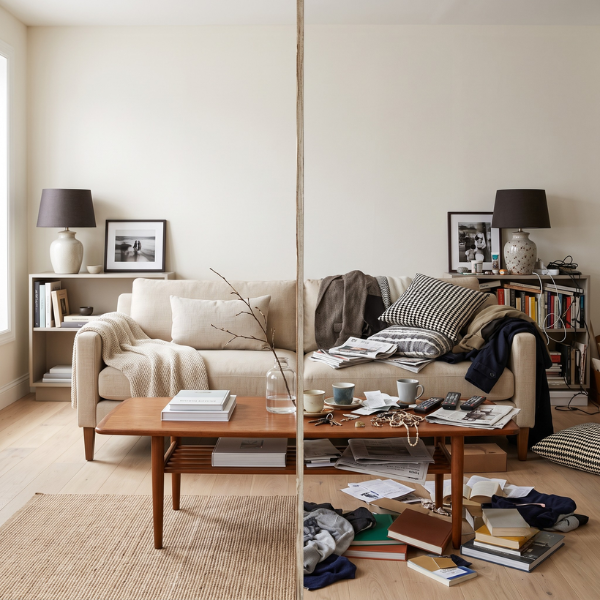
You walk into a room crammed with cushions, ornaments, and furniture jostling for space, and something in your shoulders tightens before you even sit down. Then you walk into a room with a few well-chosen pieces and space to breathe. You exhale without thinking about it. That difference is what people mean by “less is more” in room decorating. It isn’t a design trend. It’s a way of living that suits busy Gauteng households who want a home that feels good, not just one that photographs well.
Less is more doesn’t mean stripping a room bare. It means choosing what actually deserves a place in your home, and letting go of the rest. For South African families juggling work, school runs, and load shedding schedules, a simpler home is one less thing to manage every day.
Think about the last time you tidied a cluttered room. You probably spent more time moving objects around than actually cleaning. A simplified space cuts that effort. It also gives the furniture you already own room to be noticed, instead of disappearing into visual noise.
Minimalist decorating gets a bad reputation for feeling cold or unfinished. In practice, it’s closer to editing than emptying. Think of it less as emptiness and more as editing: you keep only what earns its place through function or meaning.
That could be a couch you love sinking into, a rug that ties the room together, or a lamp your grandmother gave you. The goal isn’t zero possessions. It’s making sure every item in the room is there on purpose.
Once you start editing a room instead of filling it, the benefits show up fast. You’ll notice it in how the space looks and in how it functions day to day.
Fewer surfaces means fewer things collecting dust. Fewer ornaments means less to dust, pack away, or knock over when the kids are running around. A simplified living room or bedroom is genuinely easier to keep clean, and that matters when your weekends are already full.
There’s a mental side to this too. A room with too much visual information can feel tiring to sit in, even if you can’t name why. Cutting the clutter often cuts that low-grade fatigue as well.
When you own fewer pieces, the ones you keep tend to work harder. A single, well-made couch becomes the spot the whole family gravitates to, instead of one of five seating options nobody quite likes. Buying fewer, better pieces also means it’s worth investing time in things like keeping your fabric couch looking its best. You’re maintaining something you actually rely on, not something gathering clothes in the corner.
Before you buy anything new, it helps to see what you already have with fresh eyes. Decluttering isn’t the fun part of decorating, but it’s the part that makes everything after it easier.
Start with one room at a time. Pull everything out if you can, or at least look at each surface honestly. Ask whether each item is used, loved, or simply forgotten.
A simple three-pile method works well here.
Work room by room rather than trying to declutter the whole house in one weekend. Living rooms and bedrooms are good places to start, since they’re the spaces you spend the most waking hours in. Once you’ve kept only what earns its place, it becomes far easier to care for those pieces properly. That might mean vacuuming a rug regularly, or spot-cleaning upholstery as soon as a spill happens.
Once a room is cleared, resist the urge to refill it. This is where the “less is more” philosophy really pays off. One strong piece almost always beats five smaller, forgettable ones.
Picture a Gauteng apartment lounge where one well-made couch, a single statement rug, and a slim console replace five clashing accent pieces. The room instantly reads bigger and calmer. That’s the effect a hero piece has.
Every room can usually support one anchor piece. In a living room, that’s often the couch. In a bedroom, it’s the bed. In a media room, it might be the TV unit. Everything else in the room should support that piece, not compete with it.
If you’re shopping for that anchor piece, it’s worth spending time on finding the right statement couch rather than settling for something that merely fills the space. A couch you’re proud of does more visual and functional work than three smaller accent chairs combined.
Buying less only works long-term if what you buy holds up. Practical details matter here, like checking a couch’s fabric rub count before you commit, or asking about the veneer on a TV unit or coffee table. Our own styling advice at Furnicare consistently favours a few durable, well-chosen pieces over cluttered rooms. Quality furniture is meant to be seen and used, not hidden under décor overload.
A well-made piece also simply lasts longer. That means fewer replacement purchases and less waste over time, which is a practical upside as well as an aesthetic one.
The biggest worry people have about simplifying a room is that it will end up feeling bare or unwelcoming. The fix isn’t more objects. It’s better texture and smarter use of space.
Texture does a lot of the emotional work that clutter used to do. A textured throw, a few well-chosen cushions, or layering in real linen textures can make a simplified room feel warm rather than sparse. The same idea applies to bedrooms, where building a simple, comfortable bed linen edit adds softness without adding visual clutter.
Scandinavian and Japandi interiors have popularised the idea that a room with three considered objects on a shelf feels more finished than one with fifteen. Texture and material do the same job that extra ornaments used to.
Empty space isn’t wasted space. A bare stretch of wall or an uncluttered corner gives the eye somewhere to rest, and it makes the pieces you do have stand out more. When you resist the urge to fill every gap, the room breathes, and so do you.
A common question about this approach is whether it actually works in small apartments and townhouses, where every square metre already has to work hard. It does. Arguably it matters more in small spaces than large ones, since clutter shows up faster when there’s less room to hide it.
In a compact Gauteng apartment lounge, start with the biggest offenders: overstuffed bookshelves and bulky media units. Rather than a shelf crammed with ornaments and old magazines, try choosing one well-edited bookshelf with a handful of meaningful objects. For the TV wall, picking a streamlined TV unit can replace several smaller cabinets and free up real floor space.
Small bedrooms benefit from the same editing mindset. Keep the bed as the clear focal point. Pair it with one bedside table per side if space allows, and let good linen and a single soft rug carry the warmth. Skip extra furniture that doesn’t earn daily use, like a chair that only ever holds clothes.
Less is more in room decorating isn’t about owning nothing. It’s about making sure everything you keep is genuinely working for your home. The common mistake is swinging too far the other way: clearing a room and then never adding warmth back in through texture, linen, or one good statement piece. Done well, editing your space leaves you with fewer things to manage and more reasons to actually enjoy the rooms you live in every day.
If you’re ready to start that edit in your own home, exploring Furnicare’s home décor range is a good place to find the kind of considered, durable pieces that make a simplified room feel complete rather than empty.