📦 Free Delivery on Linen & Decor: Orders over R1,999 (Gauteng) | Over R2,999 (Rest of SA) 🚛 Premium Furniture Delivery: Gauteng Flat Rate R1,500 | Nationwide Shipping Available
📦 Free Delivery on Linen & Decor: Orders over R1,999 (Gauteng) | Over R2,999 (Rest of SA) 🚛 Premium Furniture Delivery: Gauteng Flat Rate R1,500 | Nationwide Shipping Available
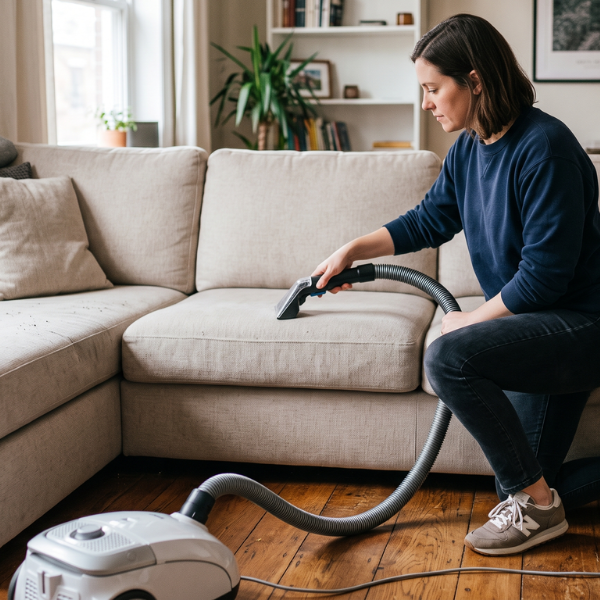
Your couch carries the day-to-day evidence of family life, Sunday afternoons, coffee mugs balanced on armrests, the dog’s favourite spot by the window. That’s exactly why it deserves proper care. Knowing how to clean a fabric couch at home isn’t about chasing a showroom look. It’s about protecting the piece your household actually lives on, so it stays comfortable and welcoming for years instead of looking tired within a season.
Most guides on this topic stop at “blot the stain” and leave you guessing about what’s actually safe to use. This one walks through the full process, from understanding your fabric’s cleaning code to treating stubborn stains, so you can clean with confidence instead of trial and error.
A couch absorbs more than spills. Dust, skin oils, pet dander and everyday grime settle into the weave over time. Left unchecked, they dull the fabric’s colour and shorten its lifespan. Regular care isn’t just cosmetic. It’s what keeps the fibres from breaking down prematurely.
A weekly once-over with a vacuum’s upholstery attachment stops everyday dust and pet hair from working deep into the weave, where it’s far harder to shift later. It takes a few minutes and makes every deeper clean easier.
Before you reach for any fabric sofa cleaning tips, check the tag under your cushions or along the frame. Most fabric couches carry a manufacturer cleaning code, W, S, WS, or X, and using the wrong method for that code is one of the most common causes of avoidable damage.
This one label determines almost everything else in this guide, so it’s worth finding before you start.
You don’t need a cupboard full of specialist products to get good results. A vacuum with an upholstery attachment, a soft-bristled brush, a couple of clean microfibre cloths, and a mild detergent will handle most routine cleaning.
For deeper cleaning or stain removal, though, household detergent has limits. It can leave residue, react unpredictably with certain dyes, or simply fail to lift ground-in dirt.
This is where a purpose-made couch cleaning solution earns its place in the cleaning kit. Furnicare’s own cleaning solutions range is formulated with fabric-safe ingredients suited to the fabric couches South African homeowners buy most often, which takes the guesswork out of matching a product to your couch’s cleaning code.
If you’re weighing up an everyday household cleaner against a dedicated upholstery cleaner, South Africa’s climate is worth factoring in too. Humidity and dust levels vary widely between coastal and inland homes, and a formulated cleaner is built to perform consistently across those conditions rather than depending on trial and error.
Once you know your fabric’s code and have the right tools on hand, the actual process of how to clean a fabric couch at home is straightforward.
Start by removing loose cushions and vacuuming every surface, including seams, crevices, and the underside where crumbs and dust collect. Use the upholstery attachment rather than a standard floor head, since it’s gentler on fabric and better at reaching tight corners. A soft brush can help loosen anything stuck in the weave before vacuuming a second time.
With the surface prepped, it’s time to clean properly:
For most homes, this full deep clean is worth doing every three to six months, depending on how heavily the couch is used and whether you have pets or young children.
Knowing how to remove stains from a couch often comes down to timing. Fresh spills and set-in marks call for genuinely different approaches, so it helps to know which situation you’re dealing with before you start.
Fresh red wine or coffee spills lift far more easily when blotted immediately with a clean cloth rather than rubbed, which only pushes the stain deeper into the fibres. Press down firmly and lift straight up, moving to a clean section of cloth as it absorbs liquid. Once you’ve blotted up as much as possible, apply a small amount of your fabric-safe cleaning solution and repeat the blotting process, working from the outside of the stain inward so it doesn’t spread.
Older stains, and anything oily like food grease or makeup, need a slightly different approach. Rather than blotting alone, gently work the cleaning solution into the stain with a soft brush, using small circular motions, then let it sit for the time recommended on the product before wiping away. Greasy marks sometimes respond well to a light dusting of bicarbonate of soda left to absorb the oil for twenty minutes before vacuuming and treating with a cleaner. Test any cleaning solution on a hidden patch first: fabric dyes and finishes react differently to moisture and chemicals, and this matters even more with set-in stains, where you’re likely applying more product and working it in more vigorously.
Two questions come up often enough to answer directly. A steam cleaner can work well on W or WS-coded fabrics, but it should never be used on S-coded couches, since the moisture and heat can shrink or stain solvent-only fabrics. Ordinary washing machine detergent, meanwhile, is generally too harsh for upholstery. It’s formulated for fully rinseable fabrics, and residue left behind on a couch can attract dirt faster than before you started.
A few small habits go a long way toward stretching the time between full cleans. Fluff and rotate cushions weekly so wear and body oils distribute more evenly across the fabric. Where possible, let your couch catch some indirect sunlight and airflow, which helps prevent musty odours from settling in, especially in humid coastal homes.
For odour control between cleans, a light sprinkling of bicarbonate of soda left on the fabric for fifteen to twenty minutes before vacuuming works well, or you can use a fabric-safe deodorising spray from your cleaning solution range. A quick weekly vacuum, paired with these small habits, keeps a couch feeling genuinely fresh. The same logic applies to other soft furnishings around the house, from cushions to bedding. Keeping your linen just as fresh matters for the same reasons: regular light care prevents the kind of build-up that eventually needs a much bigger clean.
Sometimes a couch has been through enough. If stains are old, deeply set, or cover a large area, if the fabric has started to fray or thin from repeated cleaning, or if there’s a persistent odour that won’t shift no matter what you try, the couch may need more than a DIY approach. Professional upholstery cleaners have equipment and expertise for situations beyond home remedies, particularly for X-coded fabrics that can’t be treated with any liquid cleaner at home.
There’s also a point where cleaning simply isn’t worth it anymore. If the frame has weakened, the cushions have lost their shape permanently, or the fabric itself is worn through in places, no cleaning solution will bring it back. In that case, it makes more sense to start planning your next piece. If your couch is beyond saving, our couch buying guide walks through what to look for so your next investment lasts longer and stays easier to care for from day one.
Whether it’s a weekly vacuum, a stubborn wine stain, or a full deep clean, having the right products on hand makes the difference between a couch that looks cared for and one that just gets by. Furnicare’s cleaning solutions range is built to match the fabrics South African homes actually use, so your couch stays a comfortable, welcoming part of the room for years to come.