There’s a specific feeling when you walk into a well-appointed hotel room and see the bed waiting for you. It looks impossibly smooth, substantial, inviting, promising a depth of rest that everyday life rarely affords. You can recreate that feeling at home once you understand something simple: the luxury isn’t in one expensive item. It’s in the deliberate layering of several. Learning how to layer a bed like a hotel is less about buying new things and more about mastering texture, proportion, and placement.
This approach turns a bedroom from a purely functional space into a personal retreat, one that supports rest and a bit of emotional well-being too. Furnicare’s curated linen range is built around that idea: comfort-driven design that balances hotel-style aspiration with the everyday durability a South African home actually needs. We want you to feel that same sense of arrival every time you walk into your room, knowing it’s been put together with intention.
The Foundation: Choosing the Right Bed Frame for Layering
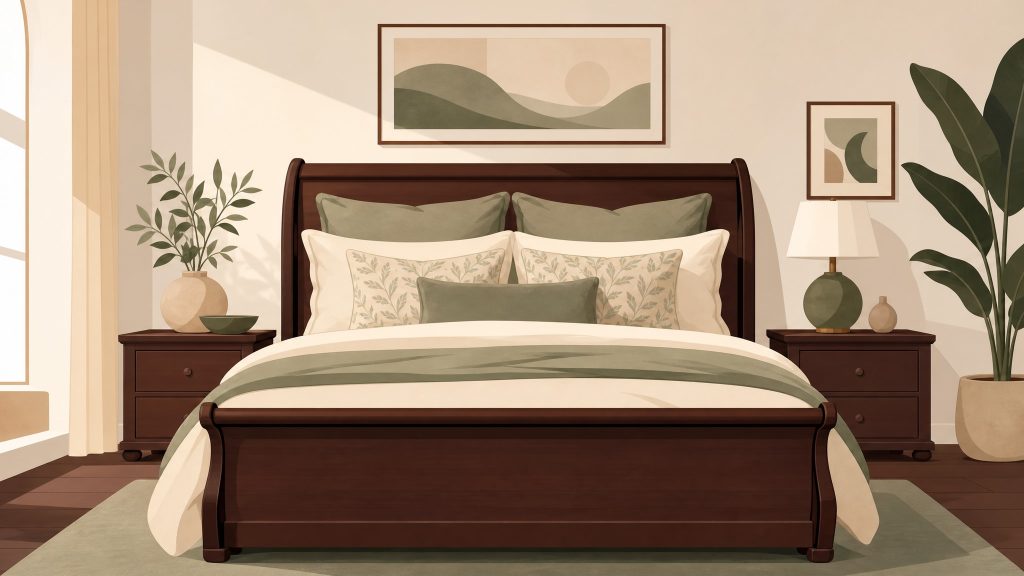
Your bed frame sets the visual boundaries of your layering. It’s the architectural anchor that stops piled textiles looking messy or ungrounded. The sweeping curved headboard on the Sleigh Mahogany Wood Bed Frame gives tall Euro shams and stacked decorative pillows something to lean against, so they don’t topple forward or vanish against a flat wall. That traditional silhouette gives you the vertical space to build height, and your cushion arrangement ends up reading as a designed feature rather than an afterthought.
Modern spaces need a different kind of structural support to keep layered bedding feeling intentional rather than heavy. The Willow Oak Floating Bed Frame creates a clean horizontal line that contrasts beautifully with soft, voluminous duvets and throws. Its minimalist profile keeps even dense layering feeling airy and contemporary, which is proof that hotel-style bedding works just as well in a sleek apartment as it does in a grander home.
The frame you choose sets the scale for everything that follows.
Step-by-Step Guide to Layering Duvets and Throws
Getting that crisp, signature silhouette means following a specific sequence, one that puts structure ahead of mere warmth. Hotel housekeeping convention places the flat sheet decorative-side down, so the pattern reveals correctly once it’s folded back over the duvet. It’s a small detail, but it signals intention, and it means you see the right side of the fabric when the bed is turned down for sleep.
Before you add your final layer, it’s worth understanding the difference between a quilted bedspread and a comforter, because this choice decides whether your bed looks structured or slouchy. A quilted spread holds its shape across the foot of the bed and keeps clean lines all day. A softer comforter tends to pool and needs frequent fluffing to look presentable. For the hotel look, structure usually wins, since it frames the sleeping layers beneath without hiding them completely.
Tuck your fitted sheet tightly, then fold the flat sheet and duvet together at the head to form a clean band of white linen. That fold exposes just enough of the sheets beneath to suggest freshness while showing off the texture of your top layer. In our climate, it also means you can peel back heavier covers on a warm night without dismantling the whole arrangement.
Adding Texture with Luxury Bedding Ideas
In a monochromatic or neutral scheme, all your visual interest comes from the interplay of weaves and finishes. The Simon Baker Kensington Jacquard Bedspread Set uses Italian-inspired motifs to bring the visual complexity and weight that authentic hotel layering needs. That tactile surface catches the light differently through the day, which is exactly what keeps a white-on-white or grey-on-grey palette from feeling flat.
Texture does more than decorate.
Matte finishes and raised weaves absorb sound and soften a room’s whole atmosphere, making the space feel quieter and more enclosed. Run your hand across a jacquard weave or a nubby throw and the physical sensation backs up the visual promise of comfort. That’s why these luxury bedding ideas work: they engage touch as actively as sight, grounding the look in something you can actually feel.
Try pairing a smooth cotton duvet cover with a textured bedspread in Stone or Grey to push that contrast further. The difference in surface quality makes each element stand out, building a depth no single fabric can manage alone. It’s how boutique hotels make a simple colour palette feel rich rather than sparse.
How to Style a Bed with Cushions and Shams
Building height against the headboard means arranging pillows in a hierarchy, moving from functional to purely decorative. Start with your standard sleeping pillows in plain white cases, then place larger Euro shams in front of them to form a solid backrest. Understanding pillow shams matters here: these decorative covers are sized to fill the gap between mattress and headboard, hiding the utilitarian sleeping pillows behind them.
Add smaller accent cushions in front of the Euros to finish the graduated effect and bring in a last note of colour or pattern. Lumbar rolls or square accents that pick up a tone from your bedspread or curtains tie the room together nicely. This front row is where you can be most expressive, since these pieces swap out easily by season without disturbing the layers underneath.
What you want is a cascade that invites you to lean back and read, not a fortress of foam you have to dismantle before sleep. Keep the count proportional to your bed’s width. Overcrowd a Queen bed with King-sized Euros and it looks cramped rather than lush. The arrangement should feel abundant yet easy to use, like the bed is made for living as much as for display.
Selecting Sheets for Hotel Style Bedding
Fabric choice has to balance crispness against the reality of warm nights and shifting humidity. Breathable natural fibres remain the standard for comfort, though modern synthetics have closed the gap on drape and wrinkle resistance. Choosing between microfibre and cotton comes down to how much maintenance you’re willing to do to keep that polished look after washing.
Cotton percale gives you the cool, matte finish associated with traditional hospitality, and it improves with age. But it needs to come out of the dryer promptly and often wants a light iron to get those sharp hospital corners. Microfibre drapes smoothly straight off the machine and resists creasing, which makes it the practical choice for a household where daily polish matters more than fibre purity.
Thread count is only part of the story.
Weave structure and yarn quality affect breathability more than thread count alone, especially in a Gauteng summer where heat builds fast under heavy layers. Look for fabric that wicks moisture and lets air move, rather than one that simply boasts a high number. The best hotel-style bedding is the kind that stays comfortable at 2am in January, not just the kind that photographs well at noon.
Bedroom Styling Tips: Beyond the Linens
A beautifully layered bed loses its impact if the furniture around it clashes in scale or tone. The Panama Oak Wood Dresser, spanning 1.8 metres, gives you visual weight that matches substantial bedding without competing for attention. Its generous surface and organic texture offer a calm, solid counterpoint to all that softness.
The Highlands Oak Wood Bed Frame brings a similar, Scandinavian-leaning warmth that grounds ornate linens in natural simplicity. The wood grain brings in something alive, which keeps the room from feeling like a staged showroom. Dust the wood regularly and polish it occasionally, and the whole space stays curated and cohesive, extending the hotel feeling beyond the bed itself.
Lighting and window treatments finish the picture by controlling how texture reads at different times of day. Sheer curtains diffuse harsh sun to protect fabric and soften shadows, and bedside lamps with warm bulbs bring out the richness in wood tones and textile weaves. These supporting elements keep your layered bed the focal point, rather than something sitting in isolation.
Maintaining Your Layered Look Year-Round
South Africa’s seasons mean adjusting your layers to stay comfortable without losing the look you’ve built. Swap heavier duvets for lighter fills in summer, but keep the outer bedspread the same to preserve the visual structure. This modular approach lets you regulate temperature without stripping the bed back to basics every few months.
Keeping white linens pristine takes proactive care, not reactive bleaching. Get familiar with removing stains from linen sheets before marks set, and you’ll keep the bright, clean foundation that makes hotel styling possible in the first place. Treat marks immediately, with something gentle and targeted rather than a harsh chemical that degrades fibres and yellows them over time.
Air your bedding regularly between washes to keep it fresh and cut down on how often you need a full laundry cycle. Open the windows in a dry spell, or run a fan, and you’ll stop mustiness building up in humid weather. It’s a simple habit, and it’s what keeps the bed smelling as inviting as it looks.