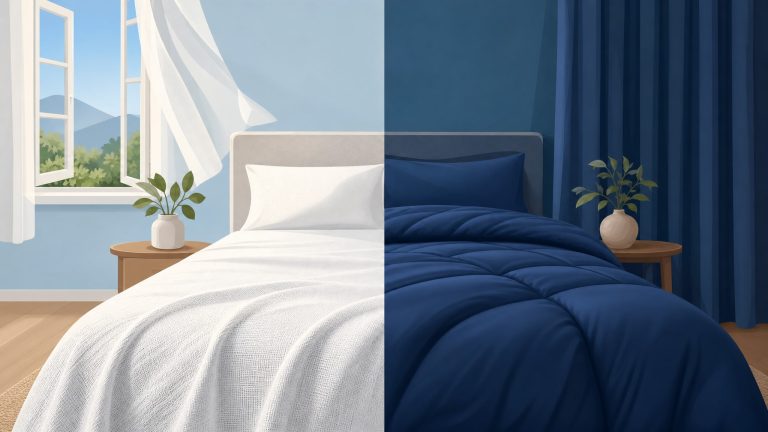
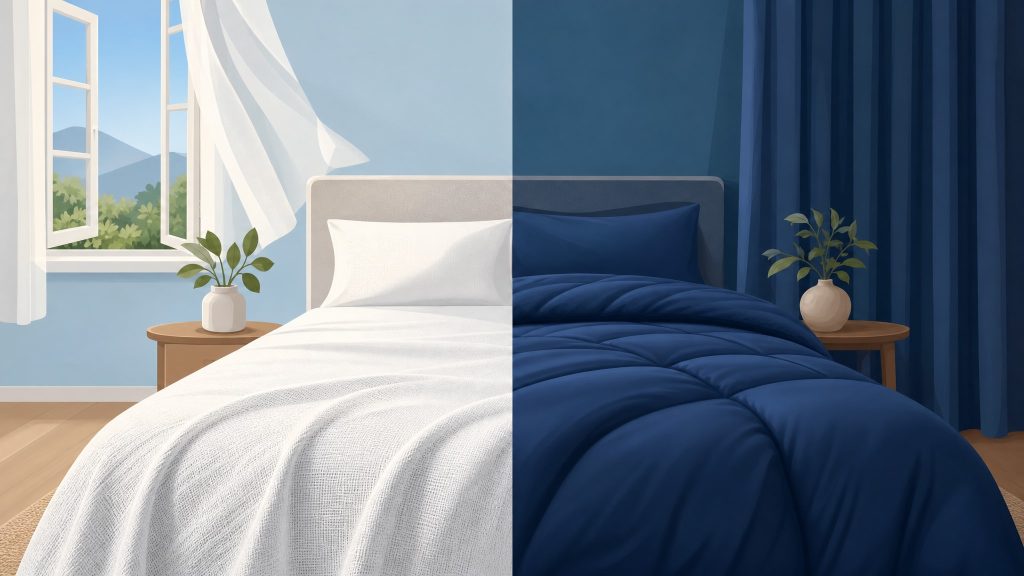
Choosing new bedding often starts with a simple question about fabric. But the answer depends on where you live and how you sleep. The debate over microfibre vs cotton bed sheets in South Africa isn’t just about thread count or price; it’s about matching the material to our climate. A sheet that feels lovely in a dry Johannesburg winter can turn unbearable in a humid Durban summer. Understanding the difference between natural and synthetic fibres is the first step toward a better night’s rest.
Understanding Fabric Basics for South African Bedrooms
Cotton is a natural cellulose fibre harvested from the boll of the cotton plant. Its structure lets it absorb moisture and breathe. Microfibre is a synthetic fabric, usually woven from polyester or polyamide filaments split finer than a human hair, and its softness comes from that fine mechanical texture rather than any biological property. This matters because your skin meets these materials very differently through the night.
Natural fibres allow more air to move through them than synthetic microfibres do, which is why cotton generally regulates temperature better in warm rooms. Microfibre’s dense weave traps body heat, which is welcome on a cold night but works against you once temperatures rise. You’re not just choosing a texture against your skin. You’re choosing the microclimate you’ll sleep in.
Breathability and Comfort in SA Climates
South Africa’s weather varies too much for one sheet to suit every province. What works on the Highveld can fail on the coast, so your choice should follow the humidity and temperature swings of your own region rather than a generic comfort claim.
Cotton’s Natural Airflow for Humid Coastal Nights
Cotton can absorb up to 27 times its own weight in water. Polyester-based microfibre, on the other hand, is hydrophobic: it wicks moisture rather than absorbing it. That difference matters for coastal sleepers in KwaZulu-Natal or the Eastern Cape, where humidity is high enough that sweat struggles to evaporate off a synthetic surface. In these humid regions, sleepers often report waking up damp on synthetic sheets, because moisture gets trapped rather than released; cotton, by contrast, lets it evaporate and keeps the bed drier.
Natural fibres don’t need a high thread count to breathe well, unlike synthetics, which rely on special weaves to fake the effect. In fact, a very tight cotton weave can sometimes reduce breathability, so it’s fibre quality, not thread count, that tends to decide how cool a sheet sleeps. If you’re after the best sheets for a hot South African climate, a mid-range percale or sateen cotton will usually beat even a premium microfibre.
Microfibre’s Heat Retention in Dry Inland Regions
Inland areas like Gauteng and the Free State swing hard between freezing nights and warm, dry days. Microfibre’s tight weave suits this well: it holds body heat without the bulk of a heavier natural fabric, so the bed warms up fast on a winter night. That’s why microfibre shows up so often among affordable bed sheets in South Africa, chosen for guest rooms or a winter rotation where insulation at a lower price matters more than year-round comfort.
The trouble is the same heat retention that feels good in June turns stifling once spring arrives, or during an unexpected heatwave, because the fabric can’t adapt the way natural fibres do. Sleepers who run hot, or share a bed, often find microfibre stuffy even in cooler months, with restless nights and duvets kicked half off. It has its place in the right season. It rarely works as a year-round solution inland.
Durability and Longevity of Bed Linen
Bed sheets that last in South African households need to survive frequent laundering, sun, and daily use without falling apart. Microfibre resists wrinkles and stains early on, but cotton tends to build character and strength over years of proper care in a way synthetics simply don’t.
Pilling Resistance and Fibre Strength
Microfibre gets its initial smoothness from very fine synthetic filaments, and those same filaments pill easily under friction from skin, pyjamas, or other bedding. The little balls of tangled fibre show up fastest where friction is highest, at the foot of the bed or on pillowcases, and once they do, the fabric’s original appeal is gone. Long-staple cotton resists this because its longer fibres make stronger yarn that holds together under stress.
Good cotton actually gets better with age. Each wash relaxes and softens the fibres a little more, building a lived-in comfort no synthetic ever quite reaches. That means the investment pays off over years, not months, as long as you pick a decent grade and look after it reasonably well.
Wash Frequency and Wear Over Time
South African households often wash bedding weekly, whether for heat, dust or allergies, and that’s real mechanical stress on the fibres over time. Cotton copes with higher wash temperatures and rougher cycles without breaking down, while microfibre can degrade under repeated heat or harsh detergents. Its synthetic polymers gradually weaken with thermal exposure, leaving the fabric thinner and less soft after enough washes.
Furnicare curates its linen ranges specifically tested for South African washing conditions and climate variations, so durability matches what’s promised on the label. That testing accounts for local water hardness, the detergents people actually use here, and typical machine settings, rather than relying on generic international textile benchmarks.
Care, Maintenance and Stain Removal
Microfibre dries fast and comes out of the dryer nearly wrinkle-free, which cuts ironing time for a busy household. Cotton asks for a little more care: lower heat settings, and getting it out of the dryer promptly to avoid creasing and shrinkage. That extra attention on laundry day is what buys cotton its longer life and lasting comfort.
Hard water areas in parts of Gauteng and the Western Cape can leave mineral deposits on either fabric, though cotton handles a vinegar rinse or descaling treatment better than synthetics do. When something spills, knowing how to lift the mark without damaging the weave underneath saves you from an early replacement. Our guide on removing stains from linen safely covers techniques that protect natural fibres while still shifting common household spills.
Skip fabric softener on both materials. It coats the fibres, cutting cotton’s absorbency while making microfibre pill faster. Line-drying cotton in sunlight gives it a natural, gentle bleach and some sanitising too, something synthetic fabric can’t take without the sun degrading it.
Price Points and Value for Money
Microfibre wins on upfront cost, and it offers decent comfort at a price that suits students, first apartments, or anyone in a temporary living situation. Affordable bed sheets in this category serve a real purpose when the budget is tight now and a shorter replacement cycle is already expected. But real value means dividing the purchase price by years of actual use, not just comparing what’s on the shelf tag.
Cotton costs more up front, but that cost spreads across many more years of comfortable sleep, which usually works out to a lower cost per night if you’re staying put. Buyers who care more about longevity than the initial saving often find that mid-range cotton beats premium microfibre on total cost of ownership. Which one wins that calculation depends on whether you treat bedding as something you replace often or as a long-term part of your home.
Better sleep and steadier temperature regulation from quality natural fibres carry a value of their own too, less need for extra cooling or heating through the night. The cheapest sheet rarely stays the cheapest once you weigh it against sleep quality and how often you’ll be replacing it over five years.
Aesthetics and Bedroom Styling Considerations
Cotton has a crisp, matte finish that photographs well and gives a room a sense of calm, considered styling. Microfibre often carries a faint synthetic sheen that can look a little cheap in natural light, especially in paler colours where that artificial lustre stands out. It’s a small difference, but it shapes how the whole room feels by day.
The way each fabric feels under your hand matters too. Cotton’s cool touch invites you to linger; microfibre’s slicker surface feels more temporary. Something like a pin quilted bedspread sits differently depending on what’s underneath it, and cotton gives it better grip and drape than microfibre does. Your sheets are the foundation everything else in the bed gets layered onto.
If you’re putting together a complete bedding layering system, cotton’s stability means neater tucking and a look that holds through the night. Microfibre tends to shift and bunch, which means fussing with it again and again to keep the bed looking the way you set it.
Choosing the Right Sheets for Your Home
Weigh climate, how much laundry fuss you’re willing to put up with, your budget horizon and your styling priorities, rather than defaulting to marketing claims or old habit. Coastal residents and hot sleepers gain the most from cotton’s breathability. Inland households might keep a microfibre set for winter rotation alongside their main natural fibre sheets. If you’d rather not adjust your laundry habits at all, synthetics might suit you better, accepting the trade-off in longevity and temperature control for convenience.
Microfibre isn’t a lesser fabric across the board; it fills a real niche wherever budget or quick drying matters more than comfort. What’s clear is that cotton is the benchmark for year-round sleep quality across most of South Africa’s climate zones and households.
Explore Furnicare’s curated linen collection to find cotton and blended options chosen with local conditions in mind, and delivered to your door. Every range is picked with South African homes in mind, weighing comfort, durability and value in ways generic imports often miss. Better sleep starts with materials that understand where you live.