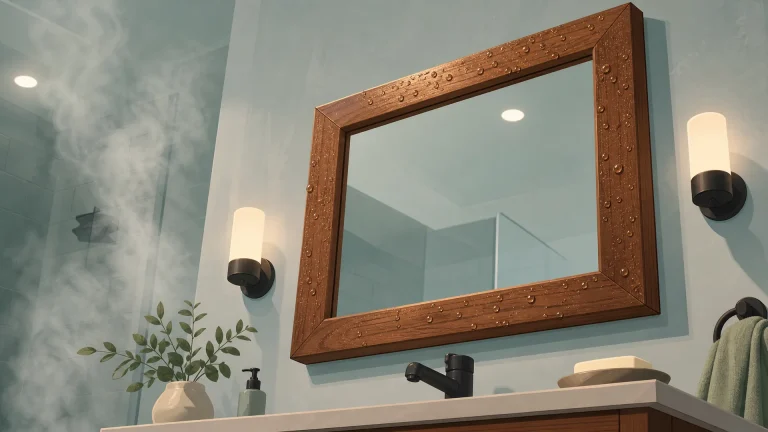
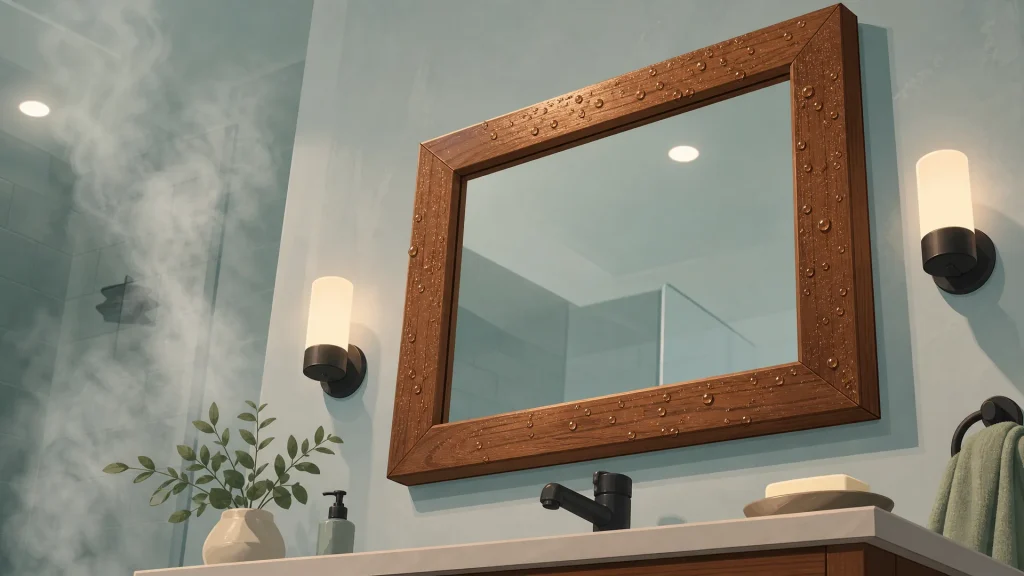
At Furnicare, we’re often asked whether a beautiful solid-wood or kiaat-framed mirror can move from a bedroom or hallway into a bathroom. It’s a question worth answering properly before you commit.
Can You Put a Wood-Framed Mirror in a Bathroom? The Short Answer
Yes, you can put a wood-framed mirror in a bathroom. But it needs the right wood, the right finish, and a sensible spot on the wall.
Untreated wood and steam do not mix well. Raw timber soaks up moisture from every hot shower. Over months, that leads to swelling, warping, or a frame that pulls apart at the joints.
The good news is that this is entirely preventable. A well-sealed hardwood frame, placed away from direct spray, can last for years in a bathroom. It just needs a bit of planning upfront.
What Actually Causes Wood Mirror Frames to Warp or Rot
Wood is porous. It expands when it absorbs moisture and contracts as it dries out again. In a bathroom, that cycle repeats every day.
Each hot shower sends warm, damp air into the room. Bathrooms without decent ventilation can hold elevated humidity for well over an hour afterwards. That’s long enough for untreated wood to soak up moisture, shower after shower.
Over time, this constant swelling and shrinking loosens joints and warps flat panels. Left unchecked, it can also invite mould, especially in corners where the frame meets the wall.
Best Wood Types and Finishes for Humid Bathrooms
Not all wood behaves the same way in a damp room. Some species and finishes handle bathroom life far better than others.
Sealed and Varnished Frames vs Raw Wood
Hardwoods like teak and oak hold up well once you seal them properly, with a marine-grade varnish or a polyurethane coating. People have favoured them for humid-room furniture for a long time. They resist swelling far better than untreated softwoods.
Kiaat is another strong option, especially for South African homes. If you want to understand why it holds up so well in local conditions, it’s worth reading about kiaat furniture’s durability in South African homes before choosing a frame.
The finish matters as much as the timber itself. A raw or lightly oiled frame will absorb moisture almost as readily as bare wood. A proper sealant creates a barrier that keeps water out of the grain. So always check that any wood mirror is fully varnished or coated before it goes anywhere near a bathroom.
Wood Veneer and Engineered Alternatives
If solid hardwood feels like a bigger investment than you want for a bathroom, veneer is worth considering. A well-finished veneered frame can give you the same warm look at a lower cost.
It’s not identical to solid timber in every respect, but it can be a sensible middle ground. Reading up on wood veneer as a lower-cost alternative will help you decide whether it suits your bathroom and your budget.
Where to Position a Wood-Framed Mirror for the Least Moisture Exposure
Even the best-sealed frame benefits from smart placement. Where you hang the mirror matters just as much as what it’s made of.
Distance from Showers and Baths
A wood-framed mirror hung well away from the shower or bath, in a bathroom with a working extractor fan, tends to fare far better than one mounted right beside a walk-in shower. Direct spray is the real enemy here, not ambient humidity alone.
If your bathroom layout allows it, put the mirror above or beside the basin, on a wall that never gets splashed. The general thinking behind tips for placing mirrors in small rooms applies here too. Positioning affects both how the room feels and how well the mirror survives.
Ventilation and Extractor Fans Matter
Good airflow does most of the heavy lifting in protecting a wood frame. An extractor fan that runs during and after showers clears steam quickly, so it doesn’t linger on nearby surfaces.
If your bathroom doesn’t have one, even a cracked window or door after bathing helps. The faster the room dries out, the less time moisture has to work its way into the wood.
How to Protect and Maintain a Wood-Framed Bathroom Mirror
A wood-framed mirror in a bathroom isn’t a “hang it and forget it” piece. It asks for a small amount of regular upkeep, much like any other wood furniture in your home.
Reapplying Sealant Over Time
Varnish and sealant wear down gradually, especially in a warm, humid room. Most wood-framed mirrors need a fresh coat of sealant every year or two, depending on how much steam the bathroom sees.
Watch for a dulling finish or patches where the wood looks slightly raised. These are early signs that it’s time to reseal, well before any real damage sets in.
Wiping Down Condensation Daily
After a shower, a quick wipe of the frame takes only a moment. It stops moisture from sitting on the wood and seeping in over time.
This habit mirrors what most of us already do with other wood furniture at home. If you already know the basics of caring for solid wood furniture, you’ll find the same principles apply here. Choosing the right cleaning products for your home also matters, since harsh chemicals can strip a sealed finish faster than moisture alone.
Watch for warning signs too. A frame that feels soft to the touch, shows dark staining, gives off a musty smell, or has started to bow or separate at the corners is telling you moisture has got in. Catch these signs early, and a reseal or repair is usually enough to save the mirror.
Wood-Framed Mirror vs Other Bathroom Mirror Frame Materials
Wood isn’t the only option for a bathroom mirror, and it’s worth weighing it against the alternatives before you buy.
Metal frames, particularly stainless steel or powder-coated aluminium, handle moisture with almost no maintenance. They won’t warp or absorb water, though they can bring a cooler, more clinical feel to the room than wood does.
PVC and plastic frames are budget-friendly and moisture-proof by design. They tend to look and feel less premium, and they rarely bring the same warmth to a bathroom.
Frameless mirrors sidestep the moisture question entirely, since there’s no frame material to protect. What you lose is the character and cosiness that a good frame adds to a room.
A sealed wood frame sits in between. It asks for more care than metal or frameless options, but it rewards you with a warmth and texture that harder materials simply can’t match.
Styling Your Bathroom with a Wood-Framed Mirror
Once you’ve settled on the right wood and the right spot, styling becomes the fun part. A wood-framed mirror can turn a purely functional bathroom into something that feels like a small retreat.
Warm timber tones pair beautifully with natural stone, soft towels, and muted wall colours. Together, they create that spa-like, unwound feeling many of us want to come home to at the end of the day.
Choosing the Right Size and Shape
Size and shape should suit both your basin and your wall space. A large rectangular frame works well above a double vanity, while a rounded or oval frame often suits a smaller, single-basin bathroom.
If you’re working with limited space, the same thinking behind tips for placing mirrors in small rooms applies to shape and scale too. And for the finer details of hanging height, a guide to getting mirror height right offers principles that carry over neatly from dining rooms to bathrooms.
A wood-framed mirror can absolutely earn its place in a bathroom. Choose a sealed hardwood or a well-finished veneer, hang it away from direct spray, and give it a little regular care. Furnicare’s range of wood-framed mirrors and home décor pieces is a good place to start planning your bathroom refresh, alongside the placement guides above.