South African summers demand bedding that works as hard as your air conditioner. When temperatures climb and humidity lingers through the night, the fabric against your skin decides whether you sleep deeply or wake up sticky and restless. Many of us default to whatever feels soft in the store, or whatever costs least, but microfibre vs cotton sheets in South Africa is a choice that should start with climate, not price tags.
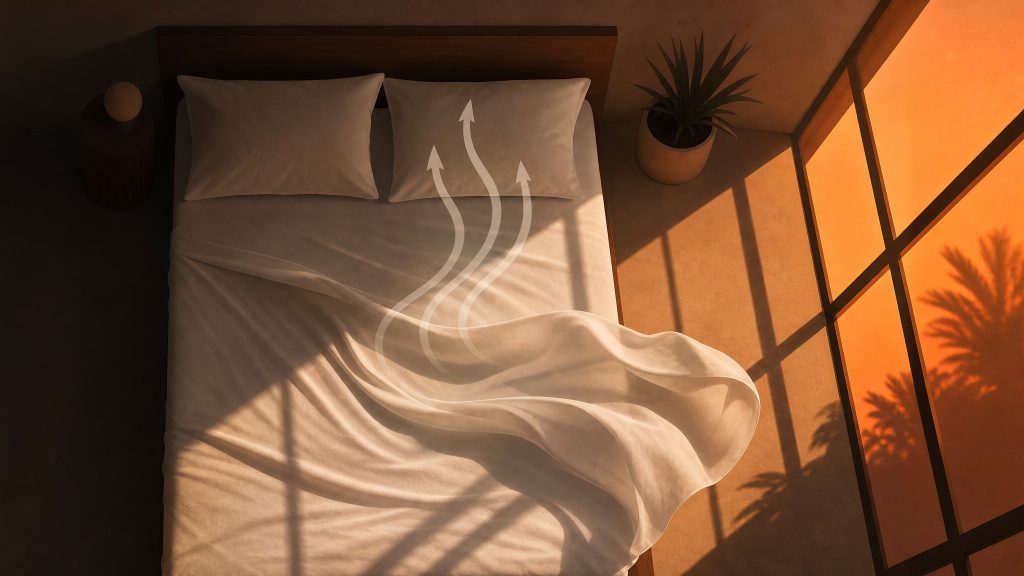
Breathability is what matters most when January heat refuses to break after sunset. You need sheets that move moisture away from your body and let air circulate, rather than trapping warmth in a synthetic cocoon. Get this right, and your bedroom stops feeling like a sauna and starts feeling like a sanctuary.
Why Fabric Choice Matters for South African Summers
Our summer nights are rarely uniform. They swing between dry Highveld heat and humid coastal stickiness that makes even light bedding feel heavy. Generic bedding advice from northern hemisphere retailers ignores these extremes, recommending fabrics suited to cold winters or mild springs that simply don’t hold up here. Your bedroom needs to respond to local conditions, not imported assumptions about seasonal comfort.
Natural fibres like cotton let air circulate freely, which prevents the heat buildup that’s common with synthetic microfibres in summer. This airflow isn’t a luxury feature, it’s a physiological necessity for keeping your body temperature in check while you sleep. When your body can’t shed excess heat, sleep cycles fragment and morning fatigue sets in no matter how many hours you spent in bed.
Synthetics may look identical to cotton on a shelf, but they behave completely differently once the mercury rises. Choosing breathable bed sheets in South Africa means picking materials that actively help cool you, rather than just covering you.
Cotton Percale vs Microfibre: A Climate-Specific Comparison
The difference between these two fabrics becomes obvious after twenty minutes under a duvet during a heatwave. Cotton percale uses a simple one-over-one-under weave that creates tiny gaps for ventilation, while microfibre relies on tightly packed polyester filaments that block airflow by design. You’ll feel this immediately if you’ve ever switched from synthetic to natural bedding in mid-summer.
Moisture Wicking and Airflow
Microfibre is essentially woven plastic. It lacks the porous structure needed for effective moisture wicking in high humidity. Sweat sits on the surface or gets trapped between fibres, and that’s what creates the clammy feeling that wakes you at 3am. Cotton absorbs moisture into the fibre itself and releases it through evaporation, keeping your skin drier and cooler through the night.
This matters enormously in coastal regions, where ambient humidity stops sweat from evaporating quickly. Synthetic sheets make the problem worse by adding another barrier between your body and the air. Cotton percale does the opposite, pulling dampness away and exposing more surface area to moving air.
Heat Retention During Heatwaves
Polyester retains body heat because it insulates rather than ventilates. During extended hot spells, that retention builds up hour by hour until the bed itself becomes a heat source. The best sheets for hot weather in South Africa need to actively dissipate warmth, not store it.
Cotton’s thermal conductivity lets heat escape through the fabric instead of bouncing back toward your skin. It’s why hotel beds in tropical climates use cotton almost exclusively, despite higher laundering costs. The initial cool touch of cotton percale sticks around because the material keeps transferring heat away all night.
The Case for Egyptian Cotton in SA Homes
Not all cotton performs equally in extreme heat, and fibre length accounts for much of the difference. Standard cotton staples produce thicker yarns that make for heavier, less breathable fabric. Extra-long staple Egyptian cotton produces finer yarns, and that creates a lighter, more breathable structure suited to hot climates.
Long-Staple Fibres and Durability
Longer fibres mean fewer joins in each strand of yarn, which gives you smoother surfaces that resist pilling and wear. That matters in South Africa, where frequent washing in warm water speeds up wear on shorter fibres. Egyptian cotton actually improves with laundering. It softens without losing the crispness that helps airflow.
The investment pays off across years of summer nights, not months. Cheaper alternatives degrade right when you need them most, losing their shape and breathability after repeated exposure to heat and detergent. Quality Egyptian cotton holds its cooling properties through hundreds of wash cycles because the fibre itself is stronger to begin with.
Simon Baker 300 Thread Count Range
Furnicare stocks the Simon Baker 300 Thread Count range specifically because its crisp tactile hand suits South African summer nights. The Simon Baker Egyptian Cotton Fitted Sheet in French Blue is a good example, with genuine extra-long staple construction at around ZAR 605 to ZAR 900 depending on size (prices may shift, so treat this as a guide rather than a quote). This thread count hits the sweet spot for our climate: dense enough to feel substantial, open enough to breathe.
Sizes run from Single through King XL, which covers the larger mattress dimensions common in modern South African homes. The fitted design keeps the sheet in place even on deeper mattresses that shift during restless summer nights. You get the feel of luxury bedding without the price tag of imported specialty linens.
Practical Considerations: Care, Cost and Longevity
Upfront cost only tells part of the story when you’re weighing natural against synthetic bedding. Microfibre wins at the checkout but loses over a five-year stretch. Cotton asks for a little more care in the wash, and it repays that care with decades of use rather than a season or two of decline.
Washing and Drying in Summer
Cotton wrinkles because natural fibres bend rather than bounce back the way plastic does. That’s a sign of authenticity, not a flaw, and most creases drop out within the first hour of use. Line drying in summer sunshine freshens cotton naturally, and the UV exposure helps keep it white without harsh chemicals.
If you’d rather skip the iron, pull sheets out of the dryer while they’re still slightly warm. For more on this, our article on caring for natural fibre linens covers stain removal and washing for South African water conditions. Synthetics resist wrinkles but can’t handle high heat, which limits your drying options when load shedding has tumble dryers running off backup power.
Value Over Time
Egyptian cotton costs more upfront because the raw material is scarcer and the processing more exacting. That expense spreads across ten or fifteen years of regular use, so the annual cost ends up lower than replacing synthetic sets every eighteen months. You also skip the hidden cost of sleeping poorly through heatwaves, which shows up in your mood and your productivity.
Microfibre degrades faster in high heat, developing odours and rough patches that no amount of washing fixes. Natural fibres age differently, picking up character instead of defects. For South African homeowners who plan to stay put and sleep well for summers to come, the higher cost of Egyptian cotton earns its keep.
Linen Sheets vs Cotton Sheets for Extreme Heat
Linen deserves a mention as the ultimate hot-weather fabric. It surpasses even cotton on breathability and moisture management. Its hollow fibres and loose weave create airflow that nothing else matches during peak February heat, though linen’s distinctive texture and higher price make it more of a specialist choice than an everyday one for most bedrooms.
Cotton stays the more versatile year-round option for South African homes, where cool winter nights sit alongside scorching summers. It moves between seasons without needing a full bedding swap, where linen can feel too austere once temperatures drop. Think of linen as your peak-summer specialist, and cotton as the one you reach for daily.
Choosing the Right Colour and Size for Your Bedroom
Fabric composition drives thermal performance, but colour and fit shape how comfortable a bed feels and how well it holds together. Dark colours absorb radiant heat even indoors, while pale shades reflect light and read as cooler to the eye. Getting the size right stops fitted sheets popping off during restless nights, which keeps the smooth surface that helps regulate temperature.
Cooling Colours for Summer Styling
French Blue, Stone, and Duck Egg call to mind water, sand, and sky, and that association alone makes a bed feel cooler before you’ve even touched it. These tones work especially well in north-facing bedrooms that catch intense afternoon sun. The Simon Baker range also includes Grey, Marine, and Natural for different tastes.
Colour choice shapes how warm or cool a room feels, independent of what the thermometer says. Cool-toned walls paired with matching sheets amplify that effect, while a few warm accents elsewhere keep the room from feeling clinical. If you want to take this further, our guide on how to layer your bed like a hotel covers both style and thermal regulation.
Sizing for SA Beds
Queen XL and King XL dimensions differ quite a bit from standard international sizing, which is the usual cause of fit problems with imported bedding. Always measure your mattress depth, topper included, since modern pillow-top constructions often run deeper than standard pockets allow. The Simon Baker fitted sheets are built for these larger formats, so they won’t stretch thin or leave corners exposed.
Getting the fit right matters even more if you’re a hot sleeper who moves around a lot at night. Loose sheets bunch up and trap heat, while overly tight ones strain at the seams and wear out faster. When you’re coordinating with top layers for variable summer warmth, our guide on choosing the right bedspread can help you match weight to season.
Making the Switch to Breathable Bed Sheets in South Africa
Your decision ultimately comes down to how you sleep, your budget, and how much care you’re willing to put into maintenance. Hot sleepers in humid regions should choose Egyptian cotton without much hesitation, and treat the minor wrinkling as a fair trade for real overnight comfort. If you’re budget-conscious, start with a single fitted sheet to test the difference before committing to a full linen cupboard upgrade.
Microfibre has its place in guest rooms or temporary setups, where low cost and wrinkle resistance matter more than how well it breathes. It doesn’t belong in a primary bedroom through a South African summer, whatever the packaging promises about softness or durability.
Upgrading to breathable natural fibres is one of the better investments you can make in how your home feels. Better sleep adds up into better days, and the right sheets remove one more obstacle between you and the rest you deserve. Have a look through the Simon Baker Egyptian Cotton collection to find the colour and size that suits your bedroom, and give yourself permission to sleep cool this summer.
Frequently Asked Questions
Are microfibre sheets suitable for hot South African summers compared to cotton?
Microfibre sheets trap body heat and lack the porous structure needed for moisture wicking in high humidity, making them uncomfortable during SA summers. Cotton percale allows air circulation and absorbs sweat away from the skin, providing significantly better temperature regulation. For hot sleepers in Gauteng or coastal regions, cotton is the clear functional choice.
What makes Egyptian cotton better for breathability than standard cotton or synthetics?
Extra-long staple fibres produce finer yarns with fewer joins, creating a lighter fabric structure with superior airflow. This openness allows heat to escape rather than accumulate against the skin during warm nights. Standard cotton uses shorter fibres that result in thicker, denser weaves which retain more warmth.
Is the higher cost of Egyptian cotton justified for SA homeowners?
Yes, because Egyptian cotton lasts significantly longer than synthetics and maintains its cooling properties through years of washing. The upfront cost amortises over a decade or more of use, making it cheaper annually than replacing microfibre sets every eighteen months. Improved sleep quality during heatwaves adds further value beyond the fabric itself.
Do hotels use cotton or microfibre sheets in hot climates?
Hotels in tropical and subtropical regions almost exclusively use cotton because it withstands industrial laundering while maintaining breathability for guests. Microfibre fails under high-temperature commercial washing and retains odours that compromise guest satisfaction. The hospitality industry’s preference reflects decades of practical testing in demanding hot-climate conditions.