You’ve fluffed the cushions a dozen times and the couch still doesn’t feel right. Too few scatter cushions, and a sofa looks bare, like it’s waiting for something. Too many, and you can barely sit down without shifting a pile onto the floor first. Getting the count right is one of those small details that makes a lounge feel finished, lived-in, and genuinely inviting.
Why the Number of Scatter Cushions Matters More Than You Think
A sofa is often the biggest piece of furniture in a room. It sets the tone for everything around it. When the cushion count is off, that whole feeling shifts, even if the couch itself is beautiful.
Too few cushions can make a generous sofa look under-dressed, especially if the fabric is plain. Too many turns a cosy corner into clutter. Guests end up holding cushions on their laps instead of relaxing. The right number strikes a balance. It adds warmth and personality without getting in the way of actual comfort.
This is why so many people ask the same question when they’re refreshing their living room: how many scatter cushions should actually go on the couch?
How Many Scatter Cushions for a 3-Seater Couch
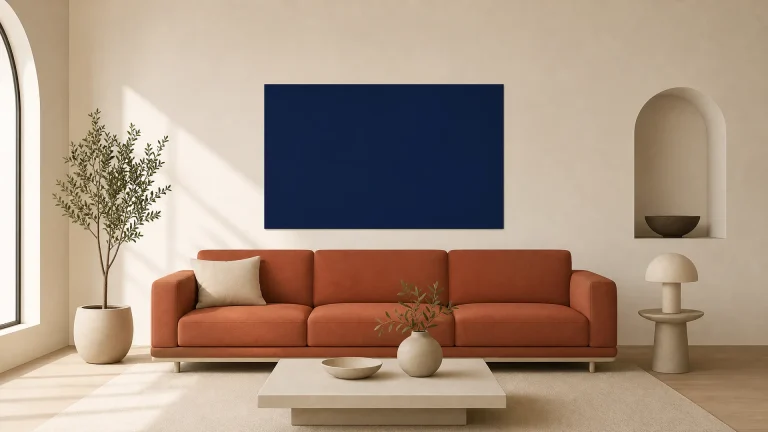
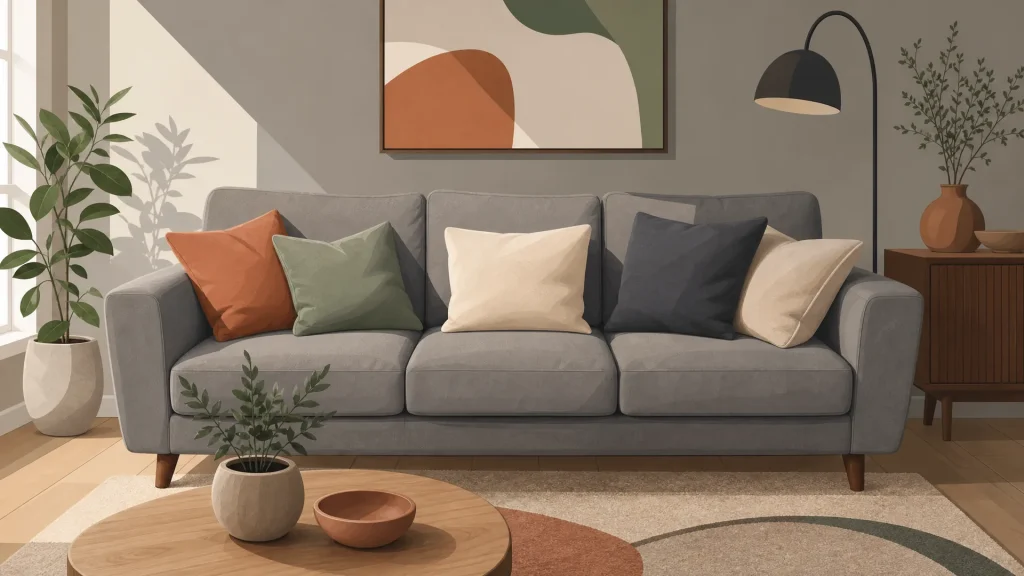
A standard 3-seater couch typically looks best with 3 to 5 scatter cushions. That range gives you enough presence to feel intentional, without overwhelming the seating space. Fewer than that can feel sparse on a larger couch. More than five often means someone has to move cushions before they can sit down.
The Classic 3 to 5 Cushion Formula
The classic odd-number rule (3 or 5 cushions rather than 2 or 4) is a long-standing styling convention. Odd groupings read as intentional and relaxed. Even numbers can look overly symmetrical and stiff, like a display rather than a home.
A useful rule of thumb many stylists use is to allow roughly one cushion per 45 to 60cm of sofa width. Then adjust up or down depending on how full or minimal you want the look to feel. A compact 3-seater might only need three cushions to feel complete. A deeper or wider one can comfortably carry five.
When to Go Minimal vs. Layered
Not every home wants the same level of styling, and that’s fine. A smaller room, a busy household with kids or pets, or a more pared-back aesthetic often suits fewer cushions. Three well-chosen cushions can do more for a room than five mismatched ones.
If you lean toward calm, uncluttered spaces, it’s worth thinking about a less-is-more approach to decorating before you start stacking cushions on. A formal lounge, a larger room, or a couch in a neutral fabric can carry a fuller five-cushion layer beautifully, especially if you’re mixing textures and sizes.
Sofa depth and arm style matter too. A low-arm or armless couch tends to look better with slightly more cushions supporting the sides, while a high, structured arm can hold its own with fewer.
How Many Scatter Cushions for an L-Shape Sofa
L-shape sofas have more surface to work with, so the cushion count naturally goes up. Most L-shape or corner sofas look best with 5 to 7 scatter cushions, spread across the corner and both arms. This gives enough coverage to feel styled on both sides, without tipping into overcrowded territory.
Balancing the Corner and the Chaise
The corner section of an L-shape sofa is often the visual anchor of the whole piece. It’s where people’s eyes land first. Give it a slightly stronger cushion presence, often a pair or an odd-numbered cluster, rather than leaving it bare.
The chaise side, being longer, can carry more cushions than the shorter arm. This isn’t about matching every cushion perfectly. It’s about making sure neither side feels forgotten. A chaise with nothing on it while the corner is piled high will always look unbalanced, no matter how nice the individual cushions are.
Styling Both Arms Evenly
Balance doesn’t mean identical. You don’t need the exact same cushions mirrored on each side. What you do need is a similar sense of weight and colour on both arms, so the sofa feels considered as a whole rather than styled in two disconnected halves.
A simple approach: group two or three cushions on the shorter arm and three or four on the longer chaise side, then let the corner tie the two groupings together. This keeps the total in that 5 to 7 range while respecting the different proportions of each section.
Choosing Sizes, Shapes, and Combinations
Once you know roughly how many cushions you need, size and shape do a lot of the remaining work. Mixing a couple of larger 60cm cushions with smaller 45cm ones adds depth, rather than a flat row of matching squares.
A common layering approach starts with the largest cushions at the back corners, then steps down in size toward the front and centre. This creates a soft, inviting shape rather than a stiff line. Lumbar or rectangular cushions work well tucked in front of larger squares, adding a bit of visual interest without taking up much seat space.
Mixing Pattern, Plain, and Texture
The most inviting sofas rarely rely on a single fabric or print. A mix of plain, patterned, and textured cushions gives the eye somewhere to rest, while still feeling coordinated. For a deeper look at getting this balance right, it helps to read up on combining pattern, plain, and textured scatters so the combination feels natural rather than random.
It’s also worth thinking about what’s inside the cushion, not just what’s on the outside. The fill affects how a cushion holds its shape over time, and how quickly it needs plumping after someone leans back. If you’re unsure which type suits your household, it’s worth comparing the options for choosing feather or synthetic cushion inners before you commit to a full set.
Common Cushion Styling Mistakes to Avoid
A few habits tend to undo an otherwise good cushion arrangement. Overstuffing a couch until there’s barely room to sit is one of the most common. If a guest has to move three cushions before they can settle in, there are simply too many.
Symmetrical overload is another trap. Mirroring every single cushion exactly on both sides can look more like a display than a home. A touch of imbalance, like one accent cushion breaking the pattern, usually feels warmer.
Mismatched fabric care is a quieter mistake, but it catches up over time. Pairing a delicate cushion cover with a couch fabric that needs frequent cleaning can lead to uneven wear. If your sofa sees daily use, it’s worth pairing your cushion choices with good habits around keeping your fabric couch clean underneath them.
Finally, don’t ignore seasonal refreshes. Swap in richer textures or deeper tones for winter, then lighter linen or cotton covers for summer. This keeps a sofa feeling current without buying a whole new set each time. It’s a small habit, but it ties nicely into how current South African room styles tend to shift with the seasons rather than staying static year-round.
Does room size or fabric change the count? Yes, a little. Smaller rooms or busy patterned upholstery generally handle fewer cushions well. Larger rooms and plainer fabrics can carry a fuller arrangement without feeling busy.
Finding the Right Scatter Cushions for Your Sofa
There’s no single perfect number that works for every home. A 3-seater couch generally sits well with 3 to 5 scatter cushions, and an L-shape sofa usually calls for 5 to 7. From there, it comes down to your room, your fabric, and how full you want the couch to feel.
What matters most is that the final look feels like yours: comfortable, considered, and a little bit personal. Furnicare’s own range of scatter cushions and cushion inners is curated to make it easy to build these combinations without hunting across multiple stores. Whether you’re topping up a couch that already gets used every evening or starting fresh with a new sofa, it’s worth browsing the range online and letting nationwide delivery bring the finishing touches straight to your home in Gauteng.