There’s a particular kind of disappointment that comes with sinking into a favourite couch, only to find your cushions have gone flat underneath you. Some cushions bounce back year after year. Others sag within months. The difference usually comes down to what’s inside them. When it comes to feather vs. synthetic cushion inners, the question of which holds shape best isn’t simple. But it does have a clear answer once you understand how each one behaves.
How feather inners hold up over time
Feather inners have a long history in home furnishings, and for good reason. They’re soft, luxurious, and mould generously to your body when you sit or lean into them. That’s part of their charm. A feather-filled cushion feels indulgent because it gives so easily.
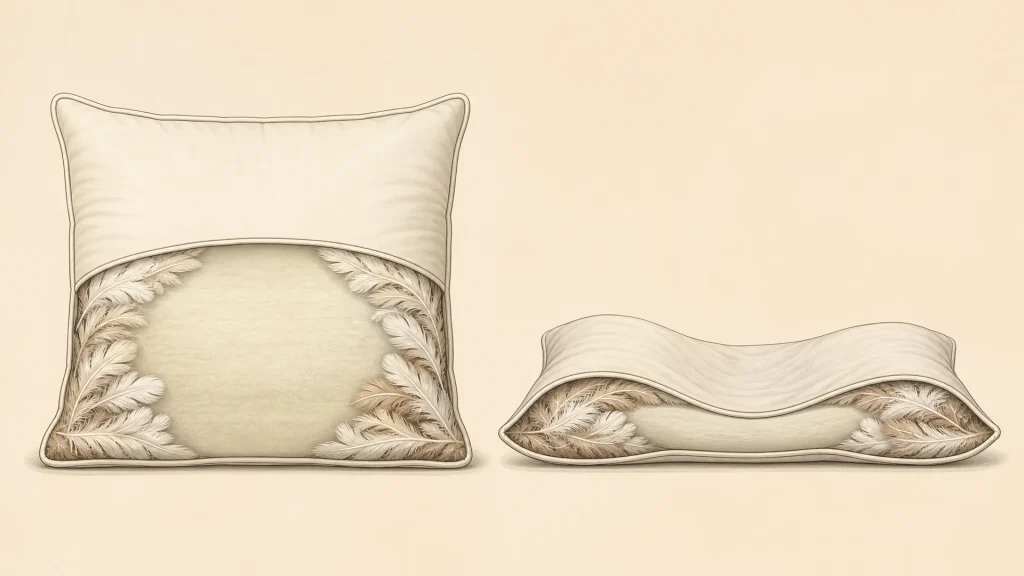
That same softness is also its weak point. Feather clusters shift and compress under weight. Over time, they migrate toward the edges or corners of a cushion cover, leaving flatter patches in the middle. This is why feather cushions almost always need a good plump and reshape after use, sometimes daily if they’re on a well-loved sofa.
The good news: feather recovers relatively well with a bit of care. A firm shake and a few solid pats can restore much of its loft, at least for a while. Down and feather blends tend to behave a little better than pure feather, since down clusters add extra loft and resilience. Still, no feather inner will hold a crisp, structured shape for long stretches without help from you.
For anyone who loves the relaxed, sink-in look of a well-dressed lounge or bedroom, feather inners are hard to beat on comfort. Just go in knowing you’ll be doing a bit of cushion maintenance along the way.
Why synthetic inners tend to keep their shape longer
Synthetic cushion inners, usually made from polyester fibre or foam, are built with structure in mind. The fibres spring back into position after being compressed, and they don’t migrate around inside the cover the way feather does. A synthetic cushion tends to look much the same at the end of the day as it did in the morning.
That makes synthetic inners a strong choice for spaces where you want a neater, more tailored look without constant fluffing. Scatter cushions on a bed you’ve just made, or accent pieces on an outdoor patio setting, tend to hold their crisp lines far more consistently with synthetic fill.
Synthetic inners are also more forgiving with everyday family life. They’re generally less prone to clumping when exposed to humidity, and many are treated to resist moisture. For homes across Gauteng, where summer humidity and dust both take a toll on soft furnishings, that’s a practical advantage worth considering.
The trade-off is usually in feel. Synthetic fill can be firmer and less enveloping than feather, especially with lower-quality fibre fill. Better-quality synthetic inners, particularly those with good density and a good fibre blend, close much of that comfort gap while still holding their shape.
Comfort versus structure: what matters more to you
Choosing between feather and synthetic inners comes down to how you want a space to feel, and how much upkeep you’re happy to do.
If your living room is where you unwind at the end of the day, feather inners bring a soft, cocooning comfort that’s genuinely lovely to sink into. You’ll just want to build the odd cushion-plump into your evening tidy-up routine, the same way you’d fluff a pillow before bed.
If you’d rather your cushions look consistently neat with minimal effort, synthetic inners are the more practical choice. This matters especially in busy households, guest rooms, or anywhere the cushions get moved around often, like a family lounge.
Many homes find a happy middle ground by mixing both. Feather inners on the statement pieces you sink into, and synthetic inners on the smaller scatter cushions that need to hold their shape for photos, styling, or everyday tidiness.
Caring for each type to extend their life
Whichever you choose, a little regular care goes a long way toward keeping cushions looking their best.
For feather inners, plump and reshape them often. Rotate cushions regularly so wear and compression spread evenly rather than settling in one spot. Keep them away from prolonged damp, since feather can clump and take on odours if it stays moist.
For synthetic inners, occasional fluffing still helps, even though they need it less often. Check that covers aren’t overstuffed or understuffed for the inner size. A mismatch can cause premature sagging on either type. Airing cushions outdoors on a dry day helps both feather and synthetic fill stay fresh and full.
Both inner types benefit from good-quality covers that fit properly. A cover that’s too loose lets fill shift and settle unevenly. One that’s too tight compresses the fill before it even gets used.
Making the right choice for your home
There’s no single winner in the feather vs. synthetic cushion debate, only the option that suits how you actually live. Feather rewards you with softness and a relaxed, lived-in warmth, provided you don’t mind a bit of ongoing plumping. Synthetic rewards you with structure and low-maintenance neatness, with a slightly firmer feel in exchange.
For most Gauteng homes juggling family life, guests, and the occasional dusty season, a mix of both often works best. Choose feather where comfort is the priority, and synthetic where shape and practicality matter more. Either way, understanding how each fill behaves means you’ll know exactly what to expect, and how to keep your cushions looking their best for years to come.