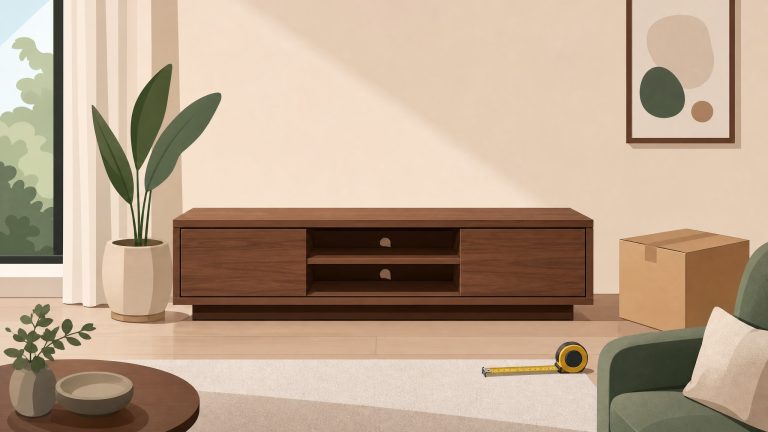
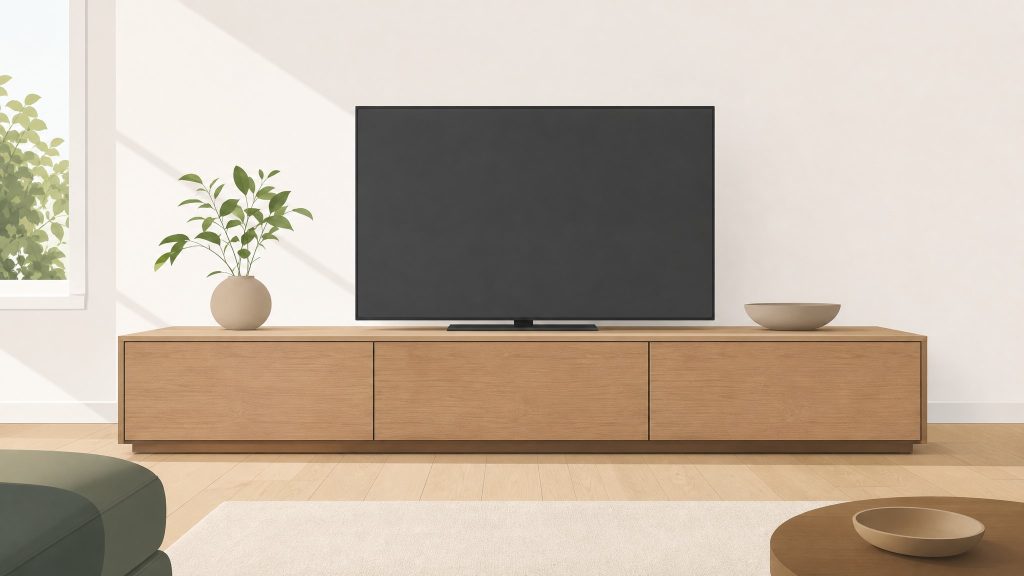
Choosing between a TV unit and wall-mounted storage often comes down to how you actually live in your space, not just what looks good in a showroom. Both solve the same basic problem, housing your screen and media equipment, but they suit different needs when it comes to floor area, installation effort, and everyday use. A freestanding console gives you immediate flexibility and generous hidden storage, while a wall-mounted system clears the floor and opens up a tighter room. Understanding that trade-off helps you choose a piece that fits your life instead of fighting your room’s limits.
Freestanding TV Consoles for Flexible South African Homes
A traditional TV console is often the visual anchor of a living room, grounding the space with real substance and a generous surface for display. It gives you deep cabinetry to hide routers, gaming consoles, and tangled cabling, with no renovation or structural change to your home needed. You simply put it where you want it, and move it whenever you refresh your layout or relocate.
Freestanding units suit renters especially well, or anyone who expects their living situation to change in the next few years. Modern media consoles typically need at least 40cm of depth to fit standard AV receivers and gaming consoles with proper ventilation, so these pieces naturally take up more floor space than their floating counterparts. That footprint buys you real storage capacity and the freedom to move the unit later without leaving drill holes or damaged plaster behind.
The top surface also becomes a stage for personal expression: framed photos, ceramics, or trailing plants that soften the technology below.
Wall-Mounted TV Units for Small Lounges and Modern Style
Lift your entertainment unit off the ground and a compact room feels different almost immediately. More floor shows, and light travels more freely across the space. Interior designers often recommend lifting furniture off the floor in rooms under 20 square metres, to keep sightlines open and the space feeling bigger, which is why a floating TV shelf is such a popular choice for apartments and open-plan lounges in South Africa. Cleaning gets easier too, since there are no heavy legs to work around and no dark corners at skirting-board level for dust to settle into.
This minimalist look does ask for some care with your wall structure before you commit to installation. Many South African homes have brick or concrete walls, which support heavy loads well, but drywall partitions need studs located, or specialised anchors, to avoid a dangerous failure. Furnicare’s delivery teams across Gauteng often help customers check wall integrity before a floating unit goes up, because the sleek look only works if the mounting hardware can genuinely carry the weight of your equipment and shelving.
Spatial Perception and Light Flow
A wall-mounted TV unit chosen for a small space creates an illusion of roominess that floor-standing furniture just can’t match. The gap between the bottom of the unit and the floor tricks the eye into reading the room as larger than it is, which matters a great deal in high-density urban housing where every square metre counts. This visual breathing room works especially well with lighter colour palettes and reflective surfaces that carry natural light further through the day.
You’ll notice the effect most in the evening, when ambient lighting bounces off the exposed floor beneath the floating shelves.
Storage Capacity: Hiding Clutter vs Displaying Décor
Closed cabinetry or open shelving: the choice comes down to whether you’d rather hide your technical equipment or curate a visible collection of things that matter to you. Neither is better on its own; each does a different job managing the visual noise that comes with any modern entertainment setup. Be honest about how much clutter you actually generate, because that’s what decides which configuration keeps your living room feeling calm rather than chaotic.
Closed Cabinetry for Media Equipment
Deep cabinets with solid doors hide the unglamorous reality of modem lights, power strips, and plastic peripherals that work against a calm room. This kind of enclosed storage keeps dust off sensitive electronics while presenting a clean line that reads as intentional design rather than a utility box. Ventilation still matters behind closed doors, so look for units with built-in airflow channels or adjustable shelving that stops heat building up around expensive components.
Open Shelving for Personal Expression
Floating shelves let you style books, artwork, and greenery so the entertainment area feels woven into the rest of your home. This works best in households with modest media equipment, or for anyone willing to invest in cable management to keep wires out of sight. The trade-off is exposure. Everything on an open shelf becomes part of the room’s visual story, so a bit of tidying becomes part of your routine rather than an annual deep clean.
Open storage does not forgive disorganisation the way closed cabinets do.
Installation and Rental Considerations in Gauteng
Drilling into walls carries consequences beyond simple DIY confidence, especially for tenants working within lease agreements in sectional title schemes. In many Gauteng sectional title schemes, leases prohibit drilling into structural walls without written consent, which makes a freestanding unit the safe default for tenants who don’t want to risk their damage deposit. Landlords may grant permission for professional installation, but the approval process adds time and uncertainty that a plug-and-play console simply avoids.
Homeowners face fewer restrictions, but still need to check that their wall can carry the combined weight of the unit and everything on it. Brick and concrete give you reliable anchoring points, while hollow-core drywall means finding timber studs or fitting toggle bolts rated for dynamic loads. Skipping that check risks property damage and personal injury both, which is why a professional assessment is worth it even for experienced DIY hands who assume every wall behaves the same way.
Your rental status should drive this decision more than looks alone.
Styling Your Entertainment Area Around the TV
A large black screen dominates any wall it’s on, so good styling is really about redistributing visual weight so the television doesn’t become the only thing you see. That means placing surrounding elements with intent, drawing the eye outward and upward instead of letting it settle only on the display. You want the entertainment zone to feel like a composed vignette, not a shrine to electronics.
Balancing Visual Weight
Tall floor lamps, vertical artwork, or stacked bookshelves next to the TV counteract the horizontal pull of both the screen and the unit beneath it. For floating installations, consider using mirrors to enhance spatial perception on the opposite wall, to reflect light and break up the solidity of the mounted cabinetry. You don’t need symmetry, but you do need equilibrium: if your TV sits left of centre, balance it with a substantial object or grouping on the right so the arrangement doesn’t feel lopsided.
Integrating Lighting and Texture
Warm LED strips under floating shelves add useful light for evening viewing while softening the hard edges of modern cabinetry. Textural contrast keeps the area from reading as sterile: woven baskets on lower shelves, linen-bound books, or matte ceramic vessels add tactile variety against smooth wood or laminate. If you’re creating a balanced gallery wall above your console, mix frame sizes and orientations to echo the organic asymmetry found elsewhere in the room, so the TV zone talks to the rest of the interior instead of sitting apart from it.
Lighting should complement the screen’s glow, not compete with it.
Choosing the Right TV Stand for Small Lounge Layouts
Measure your available wall width and depth before you start browsing. It saves you from falling for a piece that overwhelms your room or can’t fit your equipment. Mark the maximum footprint your space can handle with masking tape on the floor, then check those dimensions against product specs rather than trusting photographs, which distort scale. A stand for a small lounge still needs to leave enough walkway clearance on either side, typically at least 60cm, so people can move through the room comfortably.
Cable management should shape your choice as much as looks do. If you own several gaming consoles, a soundbar, and streaming devices, look for units with dedicated rear cutouts and internal shelving deep enough for airflow around each component. Floating shelves look elegant, but they often lack the infrastructure to hide complicated wiring, so you end up choosing between visible cables or paying for in-wall conduit installation. Be honest about how much visible technology you can live with before you commit to a minimalist form that can’t hide your actual usage.
There’s no universal winner here, because the right answer depends entirely on your space and how you live in it.
Maintaining Your TV Furniture in South African Conditions
South African sunlight is hard on wood finishes: it fades and dries surfaces in ways that hurt both appearance and structural integrity over time. Keep your TV unit out of direct window exposure where you can, or use sheer curtains to soften the harsh afternoon light that speeds up UV damage to veneers and laminates. Dust is another constant here, settling into shelf grooves and cabinet interiors faster than it would in more humid climates.
Regular, gentle cleaning protects the investment you’ve made in your entertainment furniture, whether it floats or stands on the floor. Use microfibre cloths dampened with the right cleaners rather than abrasive sprays that strip protective coatings, and deal with spills immediately before they stain or warp the surface. Caring for wooden entertainment units covers specific products suited to local conditions, so you can keep the finish looking like the day it drew you in. Consistent, small maintenance does more for lifespan than the occasional big restoration project.
Whether you need the flexible storage of a freestanding console or the space-enhancing elegance of a wall-mounted system, finding the right fit starts with understanding what your room actually needs. Browse Furnicare’s curated range through convenient online furniture shopping in Gauteng to find pieces sized for real South African homes, delivered to your door.