Wood brings warmth and character to a home, but in South Africa it also faces an environment that tests its resilience daily. The light that makes our living spaces feel open carries enough intensity to alter timber surfaces over time. Seasonal shifts in moisture can quietly stress joints and finishes from within. Protecting your wooden furniture from sun damage and humidity isn’t about shielding it from life. It’s about understanding how local conditions interact with natural materials, so you can care for them with confidence.
This guide is about practical, sustainable habits suited to Gauteng’s specific climate rather than generic preservation rules. You don’t need to treat your home like a museum to keep your pieces beautiful. You just need to align your care routine with the reality of where you live. These habits will significantly extend the lifespan and appearance of solid wood, but they can’t reverse deep structural damage or severe bleaching that’s already happened. That’s why the proactive work matters more than any restoration ever could.
Understanding How the South African Climate Affects Wood
Your furniture is in a constant, quiet relationship with the atmosphere around it, responding to changes in light and moisture long before you notice any damage. Understanding that relationship helps you move past reactive fixes and towards real care, suited to your own home.
Why UV Exposure Fades and Dries Timber
Sunlight does more than warm a room. It breaks down lignin, the organic polymer that binds wood fibres together and gives timber its structural integrity and colour. When ultraviolet radiation reaches the surface, it degrades that cellular glue, leading to a gradual greying or silvering that signals the loss of natural oils and surface strength. Kiaat and mahogany, both common in South African furniture, respond differently to UV: kiaat’s natural oil content slows the colour change, though even resilient timbers eventually succumb to prolonged radiation.
Wood typically starts to show measurable surface degradation after prolonged exposure to unfiltered sunlight beyond six hours a day in high-UV climates. That threshold shifts depending on species and finish, but it’s a useful benchmark for judging risk in north-facing rooms or spaces with a lot of glazing. The damage builds up over time and is often irreversible at the fibre level. Prevention, through placement and filtration, is still your best tool.
Humidity Swings That Cause Cracking or Warping
Gauteng’s climate is a particular challenge because humidity swings so widely between dry winters and wet summers, and timber expands and contracts with it. Solid wood absorbs moisture from humid air and releases it in dry spells. That breathing stresses glue lines, veneers and joints over years of cycling. Consistent indoor relative humidity of 40% to 60% is widely regarded as ideal for keeping solid wood dimensionally stable, yet plenty of homes drift outside that range without any mechanical help.
When humidity drops too low, wood loses moisture and shrinks, which can open hairline cracks along the grain or pull panels away from their frames. Too much moisture does the opposite: drawers stick, doors bind, veneers lift as the wood beneath expands past its designed tolerance. These movements are natural responses to an unbalanced environment, not manufacturing defects, and managing them comes down to your home’s overall atmospheric health.
Positioning Furniture to Minimise Direct Sunlight
You can protect both the beauty and the lifespan of your pieces just by watching how light moves through your space before you settle on a layout. Thoughtful placement costs nothing but attention, and it’s still the first, most enduring layer of protection against fading.
Reading Light Patterns Through Windows
Morning sun is gentler than the harsh afternoon glare that bakes west-facing surfaces, so turning sensitive pieces like dining tables or sideboards towards early light meaningfully cuts their cumulative UV dose. Spend a few days watching where direct beams land at different times. Summer and winter sun paths differ a lot in angle and how deep they reach into a room, so a piece that sits safely in shadow in June may take hours of direct sun in December.
Think about the function of each item alongside how vulnerable it is: a display cabinet holding ceramics tolerates light far better than an oiled desk or an antique chest. If you’re still choosing the right timber for your space, factor in window orientation and placement before you buy. Darker woods and oily species generally handle bright rooms with more grace.
Using Textiles and Window Treatments as Buffers
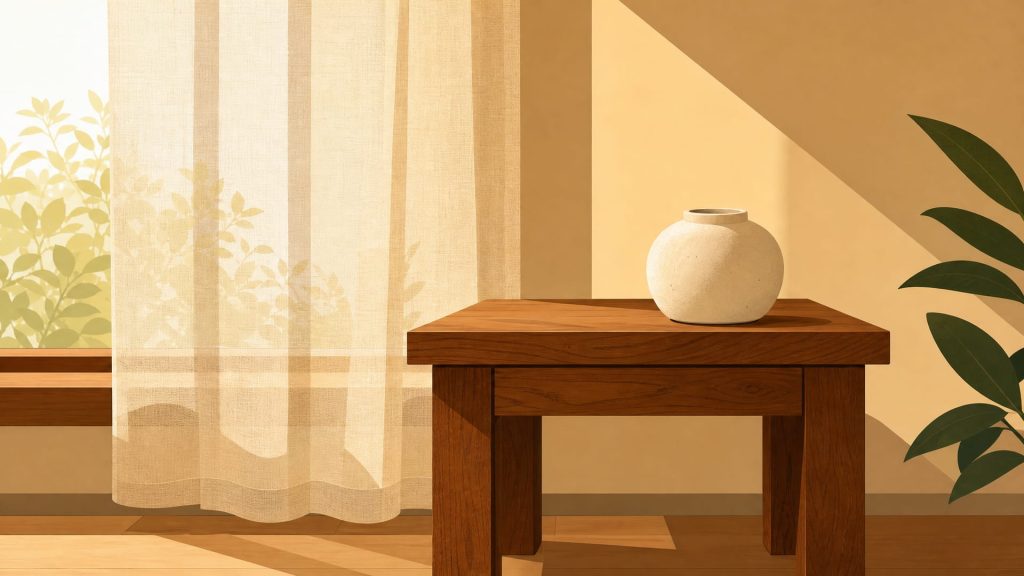
Sheer linen curtains or adjustable blinds diffuse harsh rays well while keeping the open feel that defines a lot of South African interiors. These treatments scatter direct beam radiation into softer ambient light, cutting peak UV intensity without plunging rooms into gloom. Layering lets you adjust protection through the day, drawing sheers during peak hours and leaving windows bare once the sun sits lower.
Textiles also moderate temperature swings near glass, which indirectly helps stabilise humidity around your furniture. Choose fabrics with some density rather than gauzy weaves if UV blocking matters most to you; tighter weaves filter more radiation while still letting in plenty of light.
Managing Indoor Humidity Levels Year-Round
Stable moisture levels protect your furniture more reliably than any topical treatment. But getting there means adapting your habits to the seasons rather than applying one fix all year round. Think of your home’s atmosphere as a system you actively manage, through ventilation, heating and the occasional bit of mechanical help.
Ventilation Habits for Summer and Winter
Cross-ventilation on humid summer afternoons helps stop stagnant, moist air from settling into wood grain, but timing matters, or you risk introducing dampness instead of relieving it. Open windows on opposite sides of the house when outdoor humidity is lower than indoors, usually around midday heat rather than cool evenings, when moisture condenses easily. Winter ventilation should be brief and deliberate: swap out stale, dry air without chilling surfaces enough to trigger condensation where warm interior air meets cold glass or masonry.
Don’t leave windows open overnight in the rainy season. Nocturnal cooling draws moisture deep into porous materials just when evaporation is at its slowest. Ceiling fans help circulation without the drying force of air conditioning, and they’re good for spreading humidity evenly across the large open-plan spaces common in Gauteng homes.
When to Use Dehumidifiers or Moisture Absorbers
Enclosed spaces like credenzas, wardrobes or display cabinets create their own microclimates, trapping moisture independently of the rest of the room, especially in long wet spells. Passive moisture absorbers placed inside these compartments are cheap insurance against mould and swelling, and they need no electricity or ongoing attention. Standalone dehumidifiers become worth it when whole-room humidity sits above 65% despite decent ventilation, particularly in basement spaces or homes with limited airflow.
Monitor conditions with a simple hygrometer rather than guessing. Human perception of humidity is notoriously unreliable, and seasonal baselines shift more than you’d expect. Keep moisture-control devices away from direct contact with wooden surfaces, so they don’t dry or otherwise affect the finish locally; treat them as tools for the room, not for the furniture itself.
Choosing Protective Finishes for Local Conditions
The finish you choose decides how your furniture handles both light and moisture, which makes it foundational to how well a piece holds up in South African conditions. No single product suits every situation, so matching the finish to exposure level, and to how much upkeep you’re willing to do, is what makes a protection strategy actually last.
Oils Versus Varnishes for UV Resistance
Penetrating oils feed the wood from within and are easy to spot-repair, which suits pieces that get moderate light and a bit of regular handling. They bring out the grain and age gracefully, building patina rather than showing wear as scratches or peeling. Film-forming varnishes create a harder barrier against moisture and, through added pigments or chemical absorbers, better UV filtering, which suits high-sun spots like conservatories or north-facing dining rooms where you want to keep maintenance to a minimum.
Modern hybrid finishes combine both approaches, giving penetration with more surface resistance, for anyone who wants an oiled look with varnish-like durability. Test any new finish on an inconspicuous spot first. How it interacts with existing treatments, or with a particular timber, can throw up surprises that affect both looks and protection.
Reapplication Timelines for High-Traffic Pieces
Furnicare’s care guidance recommends re-oiling high-use wooden surfaces at least once a year to keep up protection against local climate stress. High-sun or high-humidity spots may need attention twice a year, especially horizontal surfaces that get direct sun or regular contact with liquids. Varnished surfaces need renewing less often, but call for a full refinish once they fail, whereas oiled surfaces forgive a bit of neglect because the fix is simpler.
Schedule maintenance ahead of time rather than waiting for visible wear, since topping up a finish before it’s gone prevents damage that no amount of later treatment can undo. Keep a record of when you applied what. It lets you fine-tune your own intervals instead of relying on generic advice that doesn’t know your specific environment.
Daily Care Routines That Prevent Long-Term Damage
Small, consistent habits protect a finish far better than the occasional big clean, and they settle easily into the rhythm of a household. Gentle daily care clears away the grit and contaminants that would otherwise wear through the finish shielding your wood from the weather.
Dust with a soft microfibre cloth so you’re not grinding grit into the surface during normal cleaning. Deal with spills straight away with a barely damp cloth, then dry thoroughly. Never let liquid sit or soak into a compromised finish. Skip silicone-based polishes altogether. They give a superficial shine while trapping moisture underneath and building up a residue that gets in the way of proper treatment later.
Use coasters, trivets and placemats religiously to keep hot or wet items off finished surfaces. These small habits cost almost nothing, and they prevent most of the damage that builds up through ordinary living rather than any single disaster.
Recognising Early Signs of Environmental Stress
Catching problems early turns an expensive restoration into a small adjustment, but you need to know what the early warnings look like before they turn into obvious failures. Your furniture tells you it’s under stress through texture, colour and behaviour, often months or years before the damage becomes permanent.
Surface Changes That Signal UV Damage
Fading tends to start unevenly: first on horizontal surfaces or edges catching direct sun, while vertical surfaces stay unchanged for longer. A chalky or powdery feel under your fingertips means lignin breakdown has moved past simple colour loss into real fibre degradation. Raised grain that feels rough despite recent cleaning suggests moisture cycling has started disrupting the surface cells, opening the door to further damage.
Compare protected areas, like drawer interiors or undersides, with exposed surfaces to tell true UV damage from ordinary ageing or finish wear. A shift towards grey or silver signals advanced fading that needs attention soon, while a warm amber darkening is often just natural patina worth keeping rather than correcting.
Structural Warnings From Humidity Exposure
Drawers sticking seasonally point to expansion beyond what the design allows for, whether from excessive humidity or too little clearance in the joinery. Hairline cracks near joints or panel edges mark the spots where uneven movement concentrates force past the wood’s elastic limit. Doors that no longer align, or gaps that widen and narrow with the weather, show active dimensional movement that needs an environmental fix before it becomes structural.
Listen for creaking or popping in quiet hours. These sounds are internal stress releasing within joints or panels responding to moisture gradients. Worth investigating even when you can’t see much damage, since internal failures often only show up on the surface once things have gone quite far.
Seasonal Maintenance Checklist for Wooden Pieces
Matching your care to Gauteng’s distinct seasons turns maintenance into a ritual rather than a chore, and it protects your furniture systematically as conditions shift through the year. Wood’s needs change with the seasons, and so should the kind of attention you give it.
At the start of summer, inspect every piece: check finishes for wear after months of strong sun, and get surfaces ready for the humidity ahead. Clean gently and reapply protective treatments where needed, paying particular attention to south- and west-facing pieces that took the most sun over preceding months. As winter comes on, check your humidity control and make sure heating sources aren’t creating dry zones near furniture you care about.
Deep clean and condition during the milder autumn and spring months, when moderate temperatures let products absorb and cure properly. Use these moments to rotate textiles, adjust window treatments, and rethink placement as the sun’s angle shifts. Keep a simple journal of what you observe and what you do. Over time it builds a picture of your own home’s microclimate, and that’s worth more than any generic schedule.