Choosing timber furniture is one of the most personal decisions you make when shaping a home that feels like yours. The wood you select sets the emotional temperature of a room. It changes how light plays across surfaces, and how spaces feel against your skin as Gauteng moves through its seasons. Trends cycle through paint colours and textile patterns, but timber is the constant that grounds your interior for decades.
This comparison between kiaat, oak, and mahogany goes beyond spec sheets. We want you to feel confident that your choice fits your daily rhythms, your appetite for maintenance, and your long-term vision for the space, not just an aesthetic preference. There is no single best option here, only the timber that suits your life and your home.
Understanding Kiaat, Oak, and Mahogany Characteristics
The sensory experience of timber begins before you weigh up durability or price, with how the wood looks and feels in your hand. Each species carries its own visual signature, one that will define the atmosphere of your rooms for years, so trust your immediate response to these textures as much as any technical ranking.
Visual Warmth and Grain Patterns
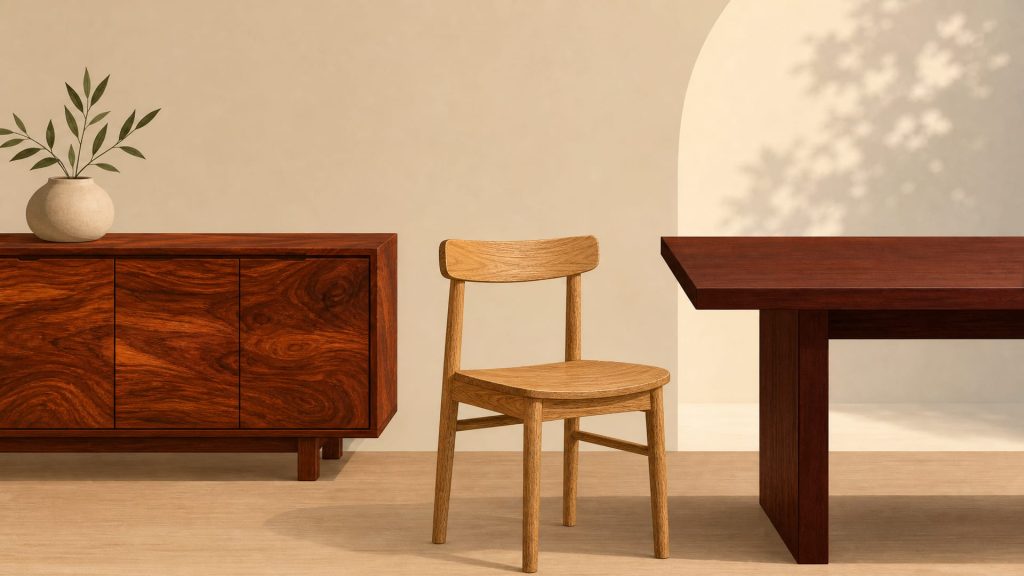
Kiaat carries rich reddish-brown tones with an interlocked grain that catches the light in a subtle, shimmering ribbon. This indigenous wood has a warmth that feels connected to the South African landscape, a depth of colour synthetic finishes can’t replicate. Oak offers a lighter, golden palette with open pores that give it an honest, tactile texture under your fingertips. Its grain runs straighter and more pronounced than kiaat’s, which suits spaces built around natural light and open air.
Mahogany sits between the two: deep reddish-brown, with a straight, fine grain that polishes to a smooth, lustrous finish. That consistency makes it versatile, it has neither oak’s bold figuring nor kiaat’s dramatic interlock, yet it still carries plenty of colour presence.
Density and Weight Differences
Oak’s Janka hardness rating of about 1,360 lbf makes it notably harder than mahogany (around 800 lbf) but softer than kiaat (around 1,970 lbf). That difference shows up directly in dent resistance in busy homes. An oak dining table will wear differently to a kiaat sideboard under the same decade of daily use, and it’s worth thinking about when you’re placing furniture in a home with young children or an energetic dog.
Kiaat furniture from the 1970s still turns up at South African estate sales with its original finish intact, which tells you something about how it ages. Mahogany’s lower hardness isn’t weakness. Its tighter grain absorbs minor impacts without splintering, which is its own kind of resilience.
Durability and Longevity in South African Climates
Gauteng’s climate tests timber in ways European or American guides rarely cover. Dry winters draw moisture out of wood fibres, and humid summers push it back in. That seasonal push and pull demands specific material properties.
Resistance to Humidity and Temperature Shifts
Timber specialists point to kiaat’s interlocked grain as the reason for its dimensional stability, which keeps warping risk low even as humidity swings. That makes kiaat furniture for South African homes a reliable pick here, where winter heating and summer thunderstorms can shift the air in a room within a single day.
Oak responds more actively to those swings, because its open pore structure absorbs and releases humidity more readily than denser timbers. You may notice slight seasonal movement in oak pieces. That’s normal, not a defect, though it does call for steady indoor climate control to avoid checking or joint stress. Mahogany sits in a stable middle ground: better moisture resistance than oak, a touch more responsive to environmental change than kiaat.
Pest Resistance and Natural Oils
Kiaat’s natural oils give it built-in resistance to borers and moisture damage, which cuts down on the chemical treatments that can change how the wood looks over time. Those protective compounds run through the heartwood, so even old pieces hold on to their defences without a fresh coat.
Oak doesn’t have that natural deterrent, and may need proactive sealing if it’s stored somewhere damp or exposed to ground-level moisture. Most oak furniture made for indoor use is kiln-dried and sealed at manufacture, but you’ll still want to keep that protective barrier topped up. Mahogany’s oil content sits between the two, offering moderate pest resistance, which is part of why it’s been a favourite timber across tropical and subtropical regions for centuries.
Styling Each Timber Type in Modern SA Homes
Your timber choice should complement your existing décor, not dictate it. It’s a foundation other design elements can evolve around. Knowing how each wood sits within contemporary South African interiors helps you avoid dating your space while still honouring what the material actually is.
Pairing Woods with Contemporary Décor
Kiaat anchors traditional and heritage looks beautifully, but it also brings unexpected warmth to a minimalist room when used as a single statement piece rather than a full suite. Its rich tone gives visual weight against the white walls and concrete floors common in modern Gauteng architecture, so the space doesn’t tip into feeling sterile.
Oak suits Scandinavian and coastal styles naturally, its lighter tone reflects light and helps create the sense of space these looks are built on. If you’re exploring oak bedroom furniture styling, you’ll find its neutral warmth sits easily with linen textiles, ceramic vessels, and the muted paint colours popular locally right now.
Mahogany bridges classic and transitional looks with ease, working just as well in a formal dining room as a relaxed family space, depending on how you style around it. Its grain takes traditional brass hardware and contemporary matte black accents equally well, so it can shift as your taste does over the years.
Mixing Timber Tones Confidently
You don’t need to commit to one timber throughout your home. Thoughtful mixing often creates a richer, more collected interior than a matching suite ever could. The trick is clear tonal separation, rather than trying to match woods that are similar but not identical, which tends to look like a mistake rather than a choice.
Pairing kiaat’s red undertones with oak’s golden neutrality works because the contrast is deliberate and easy to read. Combine two mid-tone woods with different grains instead, and it often looks accidental. Try anchoring your larger case goods in one timber and bringing in another through smaller accent pieces, so each wood gets room to breathe. That way you keep the integrity of each material, and still have the freedom to bring in an inherited piece or a future find without redoing the whole room.
Maintenance Routines for Lasting Beauty
Every timber needs some care, but how much and how often varies a good deal between species. Being honest with yourself about what you’re actually willing to do saves you from resenting furniture that asks for more than your lifestyle allows.
Kiaat needs little beyond the occasional oiling, usually once or twice a year depending on sun exposure and indoor heating. That makes it a good fit for a busy household, where furniture should serve your life rather than add to your chore list.
Oak benefits from regular waxing to stop it drying out, especially through Gauteng’s arid winters when indoor heating pulls moisture from the wood. Plan to wax oak every three to four months to keep that protective barrier intact and stop the open pores turning brittle or chalky. For a fuller routine, our article on caring for wooden dining tables walks through practical steps for South African conditions.
Mahogany responds well to gentle polishing to keep its shine, and it forgives the odd missed round of care better than oak does, thanks to its tighter grain. A quarterly polish with a good furniture cream keeps it looking rich without asking for the frequent attention open-pored timbers need.
Budget Considerations and Value Over Time
Real value means looking past the price tag on day one and asking what a piece will cost you per year over its lifetime. Timber furniture is a long relationship, not a disposable purchase, so it helps to frame your budget in decades rather than months.
Initial Investment vs. Lifespan
Kiaat often sits at a mid-range price with exceptional longevity, which makes it arguably the strongest value for South African homes that want durability without paying a premium. Its local availability keeps import markups off the price, and its stability means fewer repairs or replacements over thirty years of use.
Oak’s price varies a lot by source and grade, plantation-grown European oak, for instance, tends to cost more than some imported alternatives once you factor in shipping and certification. It’s worth thinking of oak’s higher upfront cost as buying into a particular look and feel, rather than pure function, since kiaat can match or beat its durability at a lower price.
Mahogany typically commands premium pricing, but it holds its value across generations, which is part of why it earns its cost in heirloom pieces meant to pass down.
Resale and Heirloom Potential
Well-kept timber furniture holds its value in a way upholstered or composite pieces don’t, especially when the species is one buyers recognise and want. Kiaat’s status as an indigenous South African timber gives it cultural weight that supports strong resale, particularly for mid-century and vintage pieces with a known history.
Oak sees steady demand from buyers after lighter-toned furniture that fits current tastes, though its resale value leans heavily on condition and style. Mahogany’s ties to craftsmanship and furniture history keep collectors interested, which makes it the safer bet for pieces you plan to keep in the family. When prioritising furniture purchases when moving, timber that holds its value protects your budget against whatever life changes come next.
Sustainability and Responsible Sourcing in 2026
Ethical timber sourcing has gone from niche concern to something you simply expect to know about, and you deserve to know where your furniture comes from. Choosing responsibly doesn’t mean giving up beauty or durability. Sustainable forestry now produces timber every bit as good as older harvested stock.
Responsibly harvested kiaat supports local forestry and cuts the carbon cost of shipping heavy timber across oceans. Choosing an indigenous wood ties your home to the land it stands on, and backs the rural livelihoods and forest management know-how built up over generations.
FSC-certified oak points to forests managed so harvesting keeps pace with regrowth, which protects biodiversity and watershed health where the wood comes from. Reclaimed or plantation-grown mahogany eases the pressure on old-growth stock while giving you the same working properties and look as historically sourced timber.
Furnicare’s curated range includes kiaat pieces chosen specifically for South African homes, shaped by what we know about local climate demands and style, alongside a commitment to sourcing it responsibly. You can see how these materials fit into wider design directions in our look at current South African room styles, where sustainability and style work together rather than against each other.
Making Your Final Timber Choice with Confidence
There’s no wrong answer here, as long as your choice lines up honestly with your lifestyle, your taste, and how much upkeep you’re willing to do. Rules about which wood belongs where matter far less than your own response to how a piece makes the room feel when you walk in after a long day.
Trust your instincts about warmth, texture, and colour as much as you trust the specs, because you’re the one who’ll live with this furniture through every season ahead. Touch the samples. Watch how different light changes each wood’s tone through the day, and picture your daily routine happening around these surfaces before you commit. Your home deserves timber built for your real life, not some idealised version of it.