If you’ve ever wondered why a beautifully made bed looks so much richer than your own, the answer is usually a pillow sham. It’s one of those small styling details that makes a big difference. And it costs far less than redoing your whole linen set.
What Are Pillow Shams, Exactly?
A pillow sham is a decorative pillow cover with a finished edge. That edge might be a flat flange, a piped border, or a soft ruffle. Shams are made for display, not for sleeping on directly.
They slip over a pillow insert and close at the back, hiding the opening from view. The front stays smooth and styled, which is exactly the point. A sham’s job is to look good on top of the bed during the day.
Pillow Shams vs. Pillowcases: What’s the Difference?
This is one of the most common questions people ask, and it’s a fair one. Pillow shams and pillowcases look similar at a glance, but they serve different purposes.
A pillowcase is the simple, functional cover you sleep on every night. It’s usually plain, soft, and easy to wash often. A pillow sham sits on top of or behind that pillow, adding a decorative layer once the bed is made.
So are pillow shams the same as pillowcases? Not quite. Think of the pillowcase as everyday wear and the sham as the finishing touch you add for polish.
Why Use Pillow Shams on Your Bed?
Pillow shams exist for one main reason: styling. They give your bed that layered, hotel-style finish that makes it feel more considered and complete.
Picture a hotel bed with neatly layered pillows behind the sleeping pillows. Those decorative covers are almost always pillow shams, not pillowcases. That layered look is what makes a hotel bed feel so inviting the moment you walk in.
Shams also hide your everyday sleeping pillows once you’ve made the bed for the day. Instead of worn cases, you see a clean, styled arrangement that suits your bedroom’s mood.
They’re also a smart way to update a room without buying a whole new bedding set. Swap in a new colour or pattern through shams, and you refresh the whole look for a fraction of the cost.
Types of Pillow Sham Styles and Closures
Pillow shams come in a few common finishes, each giving a slightly different feel. A flanged sham has a flat, stitched border around the edge, for a crisp, tailored look. A tailored sham sits closer to the pillow shape with minimal border, for a simpler line. A ruffled sham adds a soft, romantic edge that suits more traditional or feminine bedrooms.
Common Closures (Envelope, Zip, Button)
The back of a sham needs a way to open so you can insert the pillow. There are a few standard methods. An envelope closure uses overlapping fabric panels, so it needs no zips or buttons at all. A zip closure gives a very neat, hidden finish along one edge. A button closure uses fabric-covered buttons for a classic, slightly more decorative detail.
All three do the same job. They keep the pillow insert secure and out of sight while you sleep or move about the room.
Sizes to Match Standard, Queen, and King Pillows
What sizes do pillow shams come in? Makers generally cut them to match standard, queen, and king pillow inserts, alongside smaller European square shams often used for extra layering.
Getting the size right matters more than people expect. A sham that’s too loose looks baggy and undone. One that’s snug against the insert holds its shape and looks crisp on the bed.
How to Style Pillow Shams on Your Bed
Wondering how to put a pillow sham on a pillow? Insert the pillow through the closure at the back, then smooth the front fabric flat so the flange or trim sits evenly. Turn the sham so the closure faces the wall, keeping the front looking neat and unbroken.
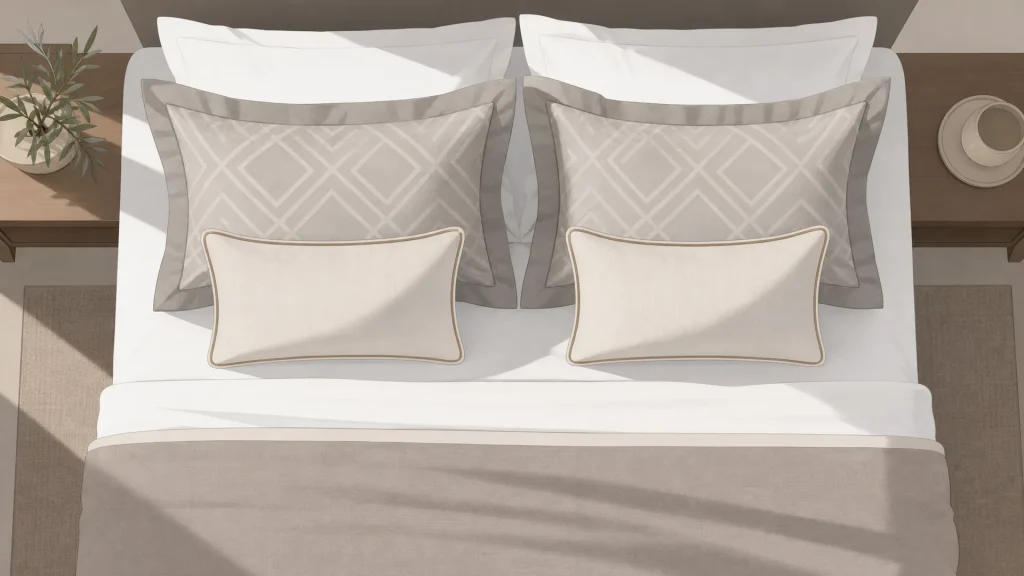
As for arrangement, most people place shams at the very back of the bed, propped against the headboard. Your everyday sleeping pillows sit in front of them, so the sham forms a backdrop rather than the front layer.
How many pillow shams do you need for a bed? For a standard or queen bed, two matching shams behind the sleeping pillows usually works well. For a king bed, you might use two larger shams plus a couple of smaller European shams for extra height and texture.
Layering Shams with Scatter Cushions and Throws
Once your shams are in place, scatter cushions and a folded throw finish the look. At Furnicare, we often suggest pairing pillow shams with a mix of scatter cushions to create that layered, curated bedroom look our customers love.
A queen or king bed styled with two standard shams plus a couple of European shams behind them instantly reads as more finished and intentional. Add two or three scatter cushions in varying sizes, then drape a throw across the foot of the bed for warmth and contrast.
Caring for and Choosing the Right Pillow Shams
Choosing pillow shams comes down to how you want your bedroom to feel and how much upkeep you’re happy to put in. Cotton and cotton-blend shams tend to be easy to wash and hold their shape well over time. Linen gives a relaxed, textured look but can wrinkle more easily, which some people love for its lived-in feel.
Fabric and Thread Count Considerations
Thread count often comes up when people shop for bedding, and it’s worth understanding in plain terms. A higher thread count generally feels smoother and more substantial. A lower one can feel crisper and more breathable. Neither is automatically better; it depends on the finish you want against a sham’s decorative surface.
Since you don’t sleep directly on shams, you can prioritise how the fabric looks and drapes over how it feels against skin. A slightly heavier weave often holds its shape best, keeping that flange or piped edge looking sharp wash after wash.
If you’re ready to bring this layered look home, browsing Furnicare’s bed linen range is a good place to start. Pair a set you love with a few scatter cushions, and you’ll have a bedroom that feels finished, inviting, and completely your own.