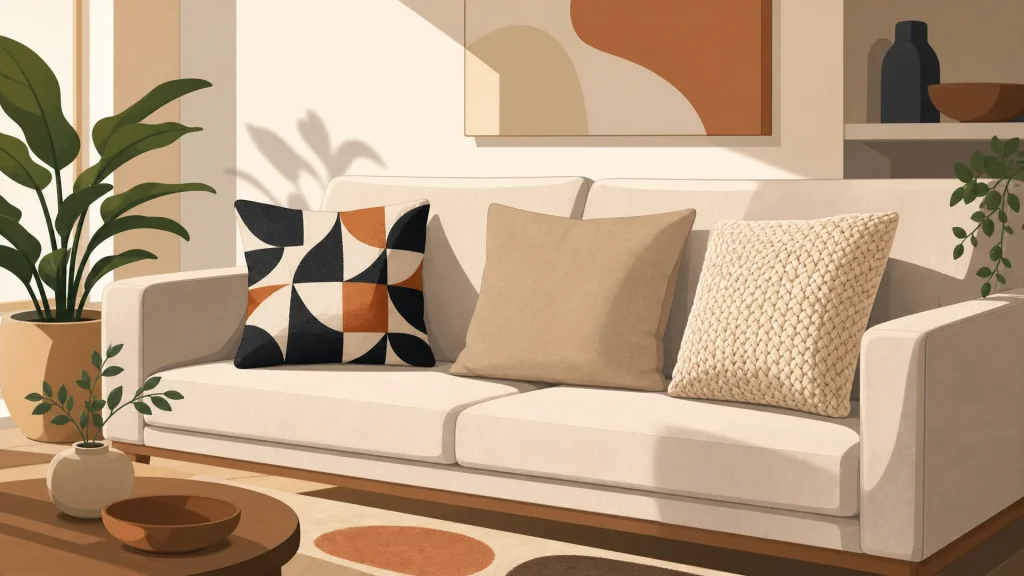
There’s a moment every home stylist knows well: the couch is clean, the cushions are new, and yet something still feels off. Usually it comes down to one thing. There’s too much of one texture, or too many patterns fighting for attention. Learning how to combine pattern, plain, and textured scatters naturally is less about rules and more about balance. Once you understand the logic, you can mix confidently, without a decorator on speed dial.
Why Mixing Pattern, Plain, and Textured Scatters Works
A couch dressed in only plain cushions can look flat, even if the fabric is beautiful. A couch dressed in only patterned cushions can feel busy and tire the eye. The trick is contrast, used with restraint. Pattern brings energy. Plain gives the eye somewhere to rest. Texture adds depth you can feel as well as see.
The Rule of Three for Scatter Cushions
Interior stylists often recommend the “rule of three”: one pattern, one plain, one texture. It’s a low-risk starting formula for anyone nervous about mixing prints. Simple to remember, hard to get wrong.
Start with one statement print, add one plain cushion in a complementary colour, then finish with one textured piece like a knit or boucle. From there, repeat or scale the formula depending on how many cushions your couch or bed calls for.
How Do I Choose a Colour Palette That Ties Scatters Together
Colour is what stops a mix of pattern, plain, and texture from looking accidental. Without a shared thread, even well-chosen cushions can feel like they landed on the couch by mistake.
Building From Your Existing Room Colours
Look at what’s already in the room before you buy anything new. Pull two or three colours from your rug, curtains, or an armchair, and let those anchor every cushion you choose. If your rug has rust, cream, and charcoal running through it, those three tones become your shopping list. A patterned cushion can carry all three colours, while the plain and textured pieces each pick up just one.
Using a Neutral Base for Bold Patterns
If your couch is already a strong colour, a neutral base often works better. Stick to whites, greys, or warm sands for your plain and textured scatters, then let one bold pattern do the talking. A neutral linen couch instantly feels more layered when you add one bold Ndebele-inspired print, one plain bolster in a matching tone, and one chunky knit or boucle cushion for texture. That single combination shows the whole formula in action. It’s easy to recreate with different colours and prints depending on your own space.
How Do I Balance Pattern Scale Without Clashing
Pattern clashes happen most often when prints are a similar size and fight for the same visual space. The fix is to vary the scale, not just the colour.
Mixing Large-Scale and Small-Scale Prints
Choose one cushion with a large, dominant print as your focal point. Pair it with a smaller-scale or geometric print in a related colour, so the two patterns read as related rather than random. Then let plain cushions sit between them, giving the eye a place to pause before it moves to the next pattern. This is also where the ratio question comes in. As a general guide, aim for no more than one plain cushion for every one to two patterned pieces on a standard couch. That keeps the look layered without tipping into clutter.
How Do I Add Texture Without It Getting Lost Next to Pattern
Texture is easy to overlook next to bold pattern, but it’s what makes a scatter arrangement feel finished rather than flat. It’s the layer you notice when you actually sit down.
Textures That Work Well in South African Homes
Boucle, linen, velvet, and knit are all reliable choices for adding tactile contrast. A chunky knit cushion softens a crisp linen print. A velvet bolster adds richness against a plain cotton base. Homes across Gauteng deal with genuine seasonal shifts, so it makes sense to swap textures with the weather. In a South African living room with a leather or fabric couch, swapping heavier velvet scatters for lighter linen or cotton ones between winter and summer is a simple seasonal refresh many homeowners already do. It costs little, and it keeps a room feeling current all year.
How Many Scatters Should I Use and How Do I Arrange Them
The right number of scatters depends on the size of your couch, but odd numbers almost always look more considered than even ones.
A Simple Layout Formula for Couches and Beds
For a 2-seater couch, three cushions is usually enough: one pattern, one plain, one textured. For a 3-seater, five works well. That gives you room for two patterns, two plains, and one textured piece, or a variation on that theme. Arrange them symmetrically at each end, with the boldest pattern nearest the armrest and softer, plainer pieces toward the middle.
Beds follow a similar layering principle to linen. Start with your pillows closest to the headboard, then layer a mix of pattern, plain, and texture in front, largest cushions at the back and smaller accent pieces up front. The same one pattern, one plain, one texture thinking that works on a couch translates naturally to a bed, just with a few more layers.
Common Scatter-Mixing Mistakes to Avoid
A few small missteps are behind most scatter combinations that don’t quite work. They’re easy to fix once you know what to look for.
- Too many competing patterns. More than two or three bold prints in one arrangement usually reads as cluttered rather than curated.
- Mismatched fabric weights. Pairing a heavy velvet with a delicate silk-look cushion can look unbalanced, even if the colours match.
- Ignoring your couch or linen colour. Cushions chosen in isolation, without reference to what they’ll sit on, often clash once they’re actually in place.
- Ordering swatches before committing. Colours can read differently online than in your own light. A quick swatch check saves you from a mismatch you’ll want to redo.
Furnicare curates its décor and linen ranges so patterns, plains, and textures within the same colour family mix straight off the shelf without guesswork. You can build your own combination with far less trial and error.
Once you’ve got the formula down, mixing pattern, plain, and textured scatters becomes second nature. Start with the rule of three, let your existing colours guide the palette, and don’t be afraid to swap pieces in as the seasons change. If you’re ready to put it into practice, explore Furnicare’s cushion, throw, and décor collections to put together a combination that feels entirely your own, and pull in fresh linen pieces to carry the same layered look through to your bedroom.