If you’ve ever stood in a linen aisle wondering whether you need a duvet inner, a bedspread, or a mattress topper, you’re not alone. These three bedding pieces get mixed up all the time. They all live on your bed. They all get called “bedding.” And shop listings don’t always explain what each one actually does.
Here’s the simple version. A duvet inner keeps you warm. A bedspread makes your bed look finished. A mattress topper changes how your bed feels underneath you. Once you separate warmth, decoration, and comfort, the rest makes sense.
Duvet Inner vs Bedspread vs Mattress Topper: The Quick Answer
Each of these three products solves a different problem. None of them can really replace the others.
A duvet inner is the puffy insert that goes inside a duvet cover. Its job is warmth. It traps air in its fill, whether that’s down, feather, or a synthetic fibre, and that trapped air keeps your body heat close to you overnight.
A bedspread is a decorative top layer. You lay it over a made bed, or fold it at the foot, mostly for how it looks rather than for warmth. It’s the finishing touch that pulls a room together.
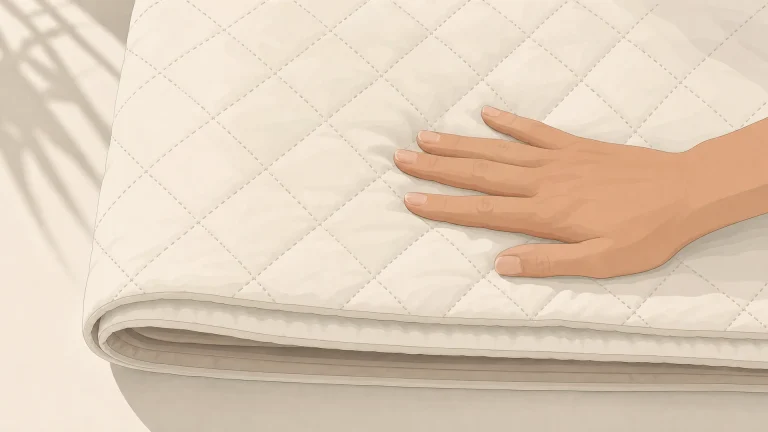
A mattress topper sits directly on your mattress, under your fitted sheet. It changes how firm or soft your bed feels. It doesn’t add warmth or style. It adds support and comfort where your body actually touches the bed.
Where Each One Sits on Your Bed
Picture your bed in layers, from the mattress up. The mattress topper sits right on top of the mattress itself, under the sheet. Above that comes your fitted sheet, then the duvet inner tucked inside its cover. The bedspread sits on top of everything, or gets folded and placed at the foot of the bed.
Thinking of your bed this way makes it much easier to shop with confidence. You’re not buying three versions of the same thing. You’re buying three layers, and each does a specific job.
What Is a Duvet Inner and What Does It Do?
A duvet inner is the quilted insert filled with down, feather, or synthetic fibre that goes inside a decorative duvet cover. It’s the layer that actually keeps you warm at night. The cover just protects it and gives your bed its look.
Without a duvet inner, a duvet cover is just an empty pillowcase-like shell. The inner does the real work of insulation.
Fill Types and Warmth Levels
Duvet inners come in a range of fill types, and each one behaves a little differently. Down-filled inners tend to feel light but very warm, since down clusters trap air well without adding much weight. Feather-filled inners are usually a bit heavier and firmer. Synthetic fills, often polyester, are a practical, allergy-friendly option that still offers good warmth for the price.
Warmth also comes down to fill weight, sometimes described in grams per square metre. A higher fill weight generally means a warmer duvet inner. A lower one suits milder nights or warmer rooms.
When to Choose a Lighter or Heavier Duvet Inner
South Africa’s climate varies a lot by region and season, so one duvet inner doesn’t suit every home year-round. In Johannesburg and Pretoria, winter nights can get genuinely cold. Many Gauteng homeowners pair a higher-loft duvet inner with a mattress topper for extra warmth during those months.
Come summer, a lighter, breathable duvet inner works better, especially under a linen cover. If you want to explore natural, breathable options, real linen duvet covers pair well with a lighter inner for warmer months, while a heavier inner suits winter. For a broader look at choosing sheets, covers, and fill types together, the complete guide to South African bed linen covers this in more depth.
What Is a Bedspread and How Is It Different?
A bedspread is a decorative covering you place over your bed, usually on top of your duvet or over neatly tucked sheets. Its main purpose is style, not warmth. It’s the layer that turns a made bed into a finished one, adding colour, pattern, or texture to the room.
Bedspreads often come in a single layer of fabric, sometimes quilted for texture, but rarely with the loft or insulation of a duvet inner. Many people use a bedspread purely as a top layer during the day, folding it back or removing it at night.
Bedspreads vs Duvet Covers: Not the Same Thing
These two get confused often, so it’s worth being clear. A duvet cover is a fabric envelope that holds your duvet inner in place, doing double duty as protection and décor. A bedspread sits on top of that entire arrangement, or replaces it altogether on beds that don’t use a duvet at all.
You can’t really use a bedspread instead of a duvet inner if you need warmth. A bedspread alone, without a duvet inner underneath, will leave you a lot colder on a chilly Gauteng night. Bedspreads shine as a style layer, not a heat source.
If you’re decorating a bedroom with a strong personal style in mind, the bedspread picks for teens’ rooms show how a well-chosen bedspread can set the whole tone of a room, quite apart from what’s keeping the sleeper warm underneath it.
What Is a Mattress Topper and Why It Matters for Comfort
A mattress topper is a layer of cushioning material, often memory foam, latex, or fibre-fill, that sits directly on top of your mattress. Your fitted sheet goes over it, so it becomes part of the sleeping surface itself.
Its job is comfort and support, not warmth or looks. A topper can soften a mattress that’s become too firm over the years, or add a bit of gentle structure to one that feels too soft. It’s one of the most effective ways to change how a bed feels without buying a whole new mattress.
Toppers typically range from around 2cm thick, for a light comfort layer, up to 8cm or more for deeper pressure relief and orthopaedic-style support. Choosing thickness comes down to personal preference. Side sleepers often like a thicker, softer topper that cushions the hips and shoulders, while back or stomach sleepers usually prefer something thinner and firmer.
Topper vs Mattress Protector: Clearing Up the Confusion
A mattress topper and a mattress protector sound similar, but they do different jobs. A protector is a thin, often waterproof layer designed to guard your mattress against spills, dust, and everyday wear. It doesn’t change how the bed feels.
A topper is thicker, and its whole purpose is to change comfort and support. Many people use both together: a topper for feel, and a protector either underneath or over the topper to keep everything clean and protected long-term.
Neither one replaces a duvet inner. A topper deals with what’s underneath you. A duvet inner deals with what’s over you. They solve completely different problems on the same bed.
How to Layer a Duvet Inner, Bedspread, and Mattress Topper Together
Getting that hotel-style, “sink into it” feeling isn’t complicated once you know the order things go in. It’s really about building the bed in layers, from the mattress up, so each piece does its job without fighting the others.
A Simple Bed-Building Order for a Hotel-Style Look
Start with the mattress topper, laid flat and smoothed out directly on the mattress. This is your comfort foundation, so take a moment to make sure it’s centred and even.
Next comes your fitted sheet, pulled snugly over the topper and mattress together. This is where breathable, good-quality linen makes a real difference to how the bed feels against your skin. If you’re building a full linen set from scratch, the complete guide to South African bed linen is a useful place to compare fabric and weave options.
Then slide your duvet inner into its cover, giving it a good shake so the fill settles evenly, and lay it over the sheet. A well-fitted cover, especially in a natural fabric like real linen duvet covers, keeps the whole bed looking crisp rather than lumpy.
Finally, add your bedspread on top, either covering the whole bed or folded in thirds at the foot, hotel-style. That folded touch is a small detail, but it’s the one that makes a bed look intentionally styled rather than just made.
This is exactly how hospitality bedding works in practice: a topper for feel, a sheet for skin contact, a duvet inner in its cover for warmth, and a bedspread or throw at the foot for polish. Each layer supports the next, rather than competing with it.
Do You Need All Three for Your Bedroom?
Not every bedroom needs all three items at once, and that’s genuinely fine. It comes down to what your bed is actually missing right now.
If your mattress still feels comfortable and supportive, you probably don’t need a topper yet. If your current duvet already keeps you warm enough through winter, there’s no rush to replace it. Think of these three products as answers to three separate questions. Are you warm enough? Does your bed feel good to sleep on? Does your room look the way you want it to?
Choosing Based on Budget, Climate, and Style
If you’re starting from scratch, a duvet inner matched to your local climate is usually the first priority, since warmth affects sleep quality directly. Furnicare’s linen and bedroom comfort range is built with South African seasons in mind, running from breathable summer-weight inners to warmer winter fill weights, so Gauteng homes can adjust as the seasons shift.
A mattress topper becomes worth the spend when your current mattress feels too firm, too soft, or simply past its best, but a full replacement isn’t in the budget yet.
A bedspread is the layer to add once the practical side of your bed is sorted, and you’re ready to focus on how the room looks and feels. It’s a relatively affordable way to refresh a bedroom’s whole mood without touching the mattress or duvet at all.
Whichever piece you start with, the goal is a bed that keeps you warm, feels good underneath you, and looks like a room you actually want to spend time in. For ideas on tying the whole space together, full bedroom makeover ideas is a good next stop. And if you’re ready to shop the range for yourself, you can shop home décor online and build up your bedroom layer by layer.