You’ve probably stood in a shop, or scrolled a website late at night, staring at two sheet sets. One says 300 thread count. The other screams 1000. Your hand goes straight for the bigger number, because surely more means better.
But thread count on its own tells you far less than you’d think. What actually decides whether sheets feel wonderful against your skin, and whether they still look good in a few years, is the fabric type and the way it’s woven. Let’s unpack what the number really means, what range is worth paying for, and why the fibre matters more than the label.
What Thread Count Really Means (And Why It’s Misunderstood)
Thread count is the number of threads woven into one square inch of fabric. That includes both the threads running lengthwise (warp) and the ones running crosswise (weft). Add them together, and you get the number printed on the packaging.
In theory, a higher number means more threads packed into that square inch. In practice, the story gets messy fast. Manufacturers have found ways to inflate the figure without actually improving the sheet.
How Thread Count Is Measured
To measure thread count properly, you count every single strand in that one-inch square. A simple, single-ply cotton yarn gives you an honest count. But some manufacturers twist several thinner threads together into one yarn, then count each thin strand as its own thread.
That means a sheet made with two-ply or four-ply yarn can claim a thread count far higher than the fabric’s real density. The label says 1000. The actual weave might perform more like a 300 or 400 count sheet made with proper single-ply yarn.
Why Higher Isn’t Always Better
This is where the marketing myth falls apart. A 300-thread-count pure cotton percale sheet often feels crisper and lasts longer than a 1000-thread-count blend padded out with multi-ply yarns. The lower number, made honestly from good cotton, can outperform the inflated one on both comfort and durability.
Many textile experts consider thread counts above roughly 400 to 500 to offer little extra comfort. Manufacturers often reach those eye-catching numbers by counting multi-ply threads as separate strands, not by weaving a denser, better fabric. So the real question isn’t whether a higher thread count is always better. It’s whether the number reflects real quality or just clever counting.
The Ideal Thread Count Range for Everyday Comfort
So what number should you actually look for? For most households, a thread count somewhere between roughly 200 and 400 hits the sweet spot.
Within that range, sheets are woven tightly enough to feel smooth and hold their shape wash after wash. They’re also loose enough in structure to breathe well, so air moves through the fabric rather than getting trapped against your skin.
Go much below 180 and sheets can feel thin or coarse. Push well past 400, especially into four-figure territory, and you tend to hit diminishing returns. You’re often paying more for a number, not for an improvement you can feel.
This 200 to 400 range applies across most fabric types, though the ideal number shifts slightly depending on whether you’re choosing cotton, linen, or a blend. That’s the next piece of the puzzle, and it matters more than most shoppers realise.
Why Fabric Type Matters More Than the Number on the Label
If you only ever compare thread counts, you’re missing the bigger decision. The fibre used, and how it’s woven, shapes almost everything about how a sheet feels, breathes, and ages.
Furnicare’s linen and bed linen guides recommend judging sheets by feel, weave, and fibre first. Thread count should sit in your mind as one factor among several, not the deciding one.
Cotton, Linen, and Blends Compared
Pure cotton is a reliable, breathable choice that softens beautifully over time with washing. Within cotton sheets, you’ll usually find two weave styles: percale and sateen, which we cover in the next section.
Linen is a different animal altogether. It’s more textured, naturally moisture-wicking, and tends to feel cool even on humid nights. Linen also gets softer and more relaxed-looking with age, which many people love for a lived-in, elegant bedroom feel. If you want to understand this fabric properly, it’s worth reading about why real linen duvet covers are worth considering before you decide.
Blended sheets, often cotton mixed with polyester or microfibre, tend to resist wrinkling and cost less. The trade-off is usually reduced breathability. They can trap more heat than pure natural fibres, which matters a great deal in a warm climate.
How Weave Affects Feel and Durability
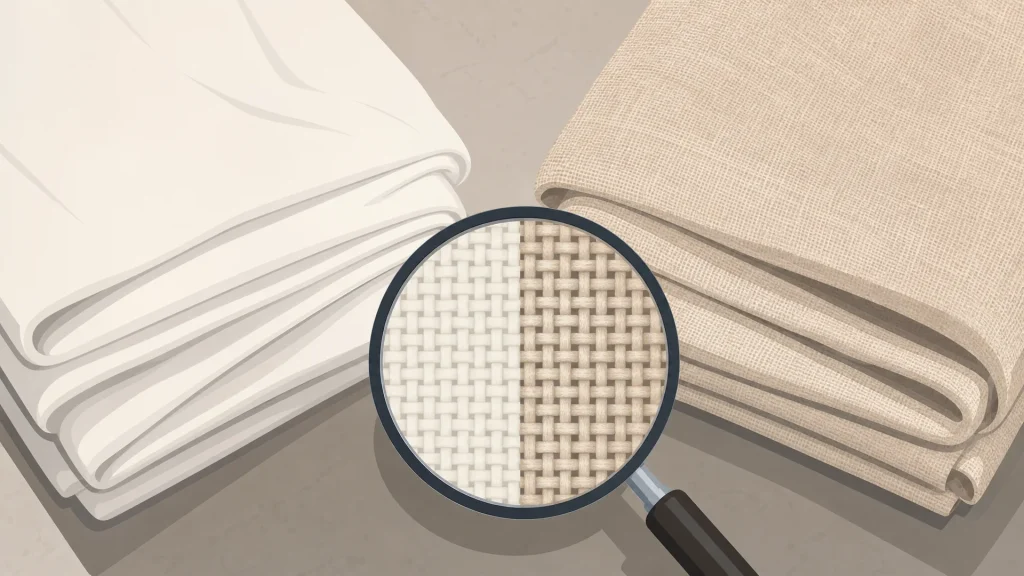
Percale weave uses a simple one-under, one-over pattern. It produces a crisp, matte, cool-to-the-touch sheet, similar to a good quality shirt fabric. It’s breathable, and the tight, even weave resists snagging, so it tends to last.
Sateen weave floats more threads over the surface before going under. That creates a smoother, silkier, slightly heavier feel with a subtle sheen. Sateen sheets often feel luxurious, but they can trap a bit more warmth than percale.
Neither weave is objectively better. It depends on whether you run warm at night or prefer a crisper, cooler feel against your skin. This is exactly why fabric type and weave deserve more of your attention than the thread count printed on the packet.
Matching Fabric and Thread Count to South African Weather and Lifestyle
Gauteng’s climate throws a fair bit at your bedding. Summers can get properly hot and humid before the storms roll in, while winter nights turn cold and dry, especially on the Highveld. Your sheets need to work across that whole range.
In Gauteng’s warm summers, a breathable percale weave or linen sheet typically sleeps cooler than a dense sateen weave, regardless of thread count. If you tend to overheat at night, put fabric and weave ahead of chasing a higher number.
For winter, a slightly heavier cotton or a flannel-backed blend can add warmth without needing an extra blanket. You don’t need to switch your whole linen cupboard seasonally, but having one lighter set and one slightly heavier set makes sense if your budget allows it.
Household lifestyle matters too. Busy families with kids or pets often do better with a cotton-polyester blend around the 200 to 300 thread count mark. It handles frequent washing without wearing out fast. If anyone in the house has sensitive skin or allergies, pure cotton or linen are usually the gentler, more breathable options. They don’t trap moisture or heat against the body the way synthetic blends can.
If you’re planning bigger bedroom changes alongside your sheet choice, it’s worth thinking holistically. You might want to browse our complete guide to the best bed linen in South Africa or start a full bedroom makeover to bring the whole room together, not just the sheets.
How to Choose Sheets You’ll Actually Love Sleeping In
By now the picture should be clear. Thread count on its own doesn’t guarantee comfort or durability. It’s a starting point, not the whole story.
Here’s a simple way to work through the decision:
- Check the fibre first. Look for 100% cotton or linen on the label rather than vague terms like “cotton-rich,” which often means a blend with less natural fibre than you’d expect.
- Ask about the weave. Percale for a crisp, cool feel. Sateen for something smoother and slightly warmer.
- Look for a thread count between roughly 200 and 400. Treat anything advertised well above that with a healthy dose of scepticism, and check the fibre and weave details before you trust the number.
- Think about your climate and household. Breathable fabric for hot Gauteng nights, easy-care blends for busy families, natural fibres for sensitive skin.
- Feel the fabric if you can. A genuine, well-made sheet has a distinct texture and weight, whatever the number on the packet says.
Real linen and quality cotton percale reward you over years of use, not just on the first night. They soften, breathe, and hold their character wash after wash in a way that inflated thread counts can’t fake.
If you’re weighing up fabric durability more broadly, it’s also worth understanding how fabric rub count works for durable upholstery, since the same principle applies: the honest number matters more than the flashiest one. And if you’re furnishing a young one’s room, picking the right bedspread for a teen’s room follows the same logic of prioritising fabric and feel over marketing claims.
The goal isn’t to win an argument about numbers. It’s to climb into bed each night and feel genuinely comfortable. Take a look through Furnicare’s bed linen range with fibre and weave in mind first, thread count second. You’ll land on sheets that suit the way you actually sleep, not just the label you saw in the shop.