If you’ve asked yourself whether custom made furniture is more expensive than the ready-made pieces on a showroom floor, the honest answer is: usually, yes. But that’s only half the story. What matters more is understanding why, and whether that extra spend actually buys you something worth having in your home. This guide walks through the real cost drivers, the hidden extras nobody warns you about, and how to get a custom look without committing to a custom price tag.
Why Custom Made Furniture Is More Expensive Than Off-the-Shelf Pieces
Custom furniture almost always costs more than something you can buy off the floor today. That’s not a pricing trick. It comes down to how the piece is made, and who makes it.
Ready-made furniture benefits from scale. A factory cutting hundreds of identical chair frames spreads its material and labour costs across every unit. A custom piece has none of that advantage. It’s made once, for one person, to one exact set of measurements.
What Drives Up the Cost of Custom Furniture
Materials sourced to a specific brief cost more than materials bought in bulk for standard runs. A cabinet maker building one dining table to your dimensions can’t buy timber at the volume discount a large manufacturer gets on a run of a thousand tables.
Skilled labour hours also add up quickly. Custom pieces need more time from an experienced craftsperson at every stage, from measuring and design through to joinery and finishing. There’s no production line to share that time across multiple units.
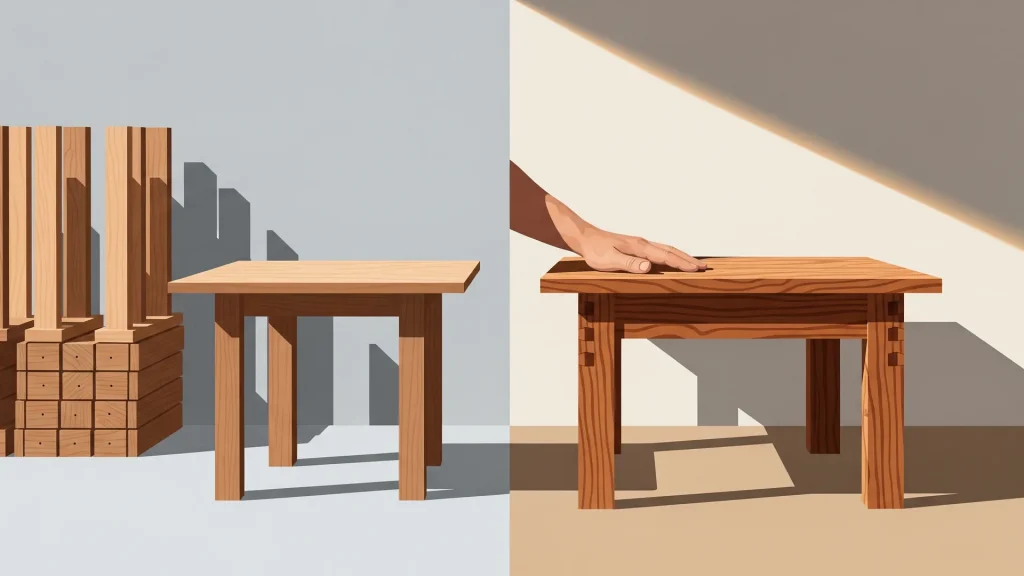
Then there’s the simple fact of one-off production. A custom-built dining suite made to fit an exact space typically costs noticeably more than a similar-sized ready-to-ship suite. That’s largely down to one-off joinery work and made-to-order material cuts. You’re paying for a single item built from scratch, not one unit off a repeatable line.
Where the Money Actually Goes
It helps to picture where your money is actually going when you commission a custom piece. A portion covers raw materials cut and prepared just for your order. Another portion covers design time: discussing your space, your needs, and your finish preferences before any wood is cut.
The rest goes toward the craftsperson’s time on the tools, plus the overheads of running a small, often independent workshop rather than a large factory floor. None of this is padding. It’s the real cost of building something that doesn’t exist anywhere else.
Custom vs Ready-Made Furniture: Comparing True Value
Price alone doesn’t tell you which option is smarter. Value is a better measure. It depends on your space, your budget, and how long you plan to keep the piece.
When Custom Is Worth the Extra Spend
Custom furniture earns its price when standard sizes simply don’t work for your home. Small space living, common in many South African apartments and townhouses, is often where the custom-vs-ready-made decision matters most. A few centimetres can determine whether furniture truly fits.
It’s also worth considering when you want a specific material and want to build around that choice from the start. Knowing the difference between solid wood and veneer construction helps here. If you have an awkward alcove, a narrow hallway, or a room shape that off-the-shelf pieces never quite suit, a made-to-measure solution can solve a problem that no amount of shopping around will fix.
When Ready-Made Makes More Sense
For most standard rooms and layouts, ready-made furniture delivers excellent value. It’s built with the same care in quality solid wood pieces, just produced at a scale that keeps prices sensible.
If your space follows fairly typical dimensions, and you’re not chasing an unusual finish or configuration, there’s rarely a strong case for paying custom prices. The savings can be significant, and the wait far shorter.
Hidden Costs to Ask About Before Commissioning Custom Furniture
Before you commit to a custom order, it pays to ask about more than just the headline price. Several costs tend to surface only after the order is placed.
Lead Times and Deposits
Custom furniture usually asks for a deposit upfront, often a meaningful percentage of the total cost, before any work begins. That money is tied up for the full build period. Depending on the workshop’s schedule and the complexity of your order, this can run to several weeks or longer.
Ask exactly how long the build will take, and what happens if it runs over. Longer lead times aren’t a red flag on their own. They’re simply part of the trade-off for something made specifically for you, and it’s worth knowing what to expect before you pay a deposit.
Delivery and Aftercare
Delivery terms for custom pieces can differ from what you’d get with ready-made furniture. Some workshops charge extra for delivery, especially over longer distances. Aftercare or repair support can also be less predictable if the maker is a small operation without dedicated service infrastructure.
This is where reliable, nationwide delivery becomes a genuine point of comparison. Established retailers with structured delivery and aftercare processes can offer more certainty than a one-person workshop juggling multiple custom orders at once. Before committing, ask directly what delivery costs, how long it takes, and what support looks like if something needs adjusting after it arrives.
How to Get Custom-Quality Furniture Without the Custom Price Tag
You don’t have to choose between a generic showroom piece and a full custom commission. There’s a strong middle ground, and it’s where a lot of smart furniture buying happens.
Choosing Well-Made Ready-to-Ship Pieces
Furnicare curates ready-to-ship pieces like solid oak dining suites and sleigh bedroom furniture that offer the look and durability of custom work without the bespoke price or wait. These are pieces designed with the same attention to proportion, material quality, and finish you’d expect from a commissioned build, just available without months of lead time.
If you’re drawn to the warmth of solid timber but don’t want to wait on a custom order, browsing space-saving solid oak dining suites is a sensible place to start. For bedrooms, timeless sleigh bedroom furniture delivers a similarly considered, classic look, ready to bring home much sooner.
Smart Ways to Personalise Off-the-Shelf Furniture
Personalisation doesn’t have to mean full customisation. Choosing the right upholstery, finish, or fabric on an existing design can make a ready-made piece feel distinctly yours. Understanding how durable upholstery fabric really is helps you choose a covering that looks good and holds up to daily life.
Small styling choices, like cushions, throws, or how you arrange a piece within a room, also go a long way toward making off-the-shelf furniture feel considered rather than generic.
Independent Craftsmen vs Corporate Furniture Makers: Who Should You Trust?
Once you’ve decided custom is the route for you, the next question is who should build it. Independent furniture makers often price more transparently than large corporate retailers. Their lead times and capacity can vary widely though, so it pays to ask detailed questions upfront.
A small independent workshop may offer more personal attention and flexibility on design details. A larger, corporate furniture maker may offer more structured timelines, established aftercare, and more predictable delivery, though sometimes with less flexibility on bespoke requests.
Neither option is automatically the right or wrong choice. It depends on how much you value flexibility versus predictability, and how comfortable you are with the trade-offs each path involves. Comparing independent furniture makers versus corporate retailers in more detail can help you weigh these trade-offs before you commit to either route.
Making the Right Call for Your Home and Budget
There’s no single right answer to whether custom made furniture is worth the extra cost. It depends on your space, your timeline, and how much you value having something built specifically for your home.
Questions to Ask Yourself Before Deciding
Start by asking how unusual your space really is. Does it genuinely require non-standard dimensions, or would a well-chosen ready-made piece do the job just as well?
Consider your timeline too. Can you wait several weeks or months for a custom build, or do you need furniture sooner? And think about your budget in full, including deposits, delivery, and aftercare, not just the quoted build price.
If ready-made increasingly looks like the smarter fit for your home, it’s worth browsing Furnicare’s curated range before making a final call. Reading up on topics like buying a couch online in South Africa can also help you buy with confidence, whichever route you choose.