There is something about a piece of Kiaat furniture that makes a house feel more like home. It carries warmth in its colour, weight in its history, and a sense that it was built to last generations, not just seasons. For South African homeowners looking for furniture that feels rooted in this country, Kiaat furniture is often the answer.
What Is Kiaat Furniture and Why It Belongs in a South African Home
Kiaat is one of southern Africa’s most cherished indigenous hardwoods. Furniture makers have used it for generations, and it still holds a special place in homes across Gauteng and beyond. Choosing it means choosing a timber that grew in African soil, not one shipped in from overseas.
The Story Behind Kiaat Wood
Kiaat comes from Pterocarpus angolensis, a tree found across the woodlands of southern Africa. It grows slowly, often over decades, and that slow growth is part of why the timber is so dense and stable. The tree has long been part of rural life in South Africa, used for everything from dugout canoes to household furniture.
Furniture makers have long favoured Kiaat for its warm reddish-brown tone and its resistance to woodborer. That’s made it a common choice for heirloom dining tables and headboards. The reputation has carried through to today, where it still turns up in farmhouses, family homes, and design-conscious apartments alike.
How Kiaat Furniture Feels in a Living Space
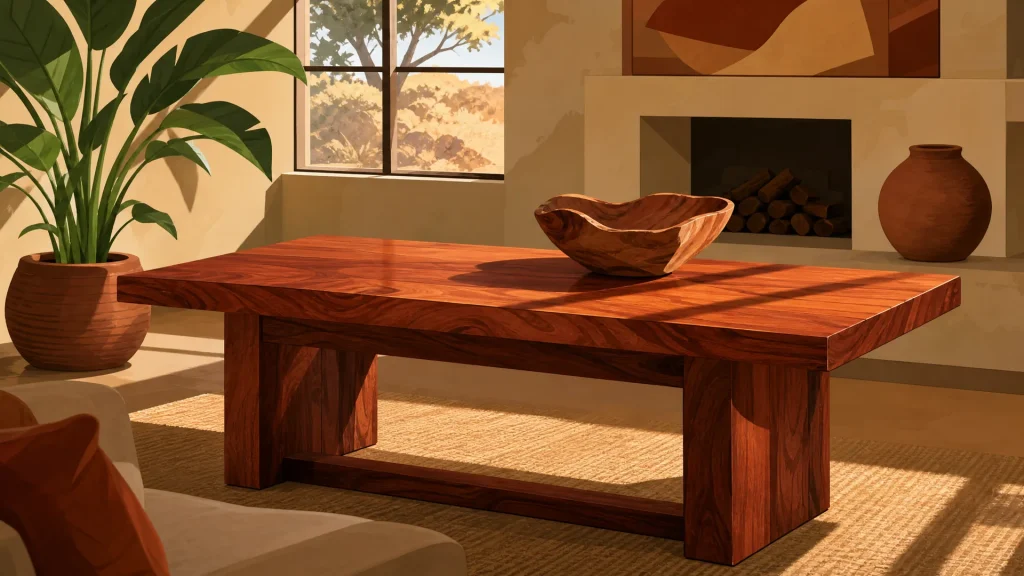
Walk into a room with a Kiaat table or cabinet, and you notice the colour first. It ranges from a soft golden brown to a deep reddish tone, often with darker streaks running through the grain. The wood feels solid underhand, smooth but never sterile.
There is a groundedness to Kiaat furniture that lighter woods rarely achieve. It anchors a room instead of just filling it. In open-plan living spaces especially, a Kiaat piece can become the visual centre that everything else is arranged around.
Key Benefits of Choosing Kiaat Furniture
Kiaat furniture earns its reputation through the way it performs over years of daily use. It is not just about looks. It is about how the wood holds up to real family life.
Durability and Resistance to Wear
Kiaat is a genuinely hard, dense timber. It resists knocks, scratches, and the general wear that comes with a busy household. It also resists woodborer beetles naturally, which is one reason it has survived so well in older South African furniture.
At Furnicare, we’ve noticed more and more customers asking for durable indigenous timbers like Kiaat as an alternative to imported wood. That preference makes sense once you consider how long a well-made Kiaat piece can serve a home, often outlasting several sofas and rugs bought along the way.
Natural Beauty That Ages Well
Unlike some furniture finishes that fade or dull over time, Kiaat tends to deepen and richen with age. Sunlight and years of gentle use bring out a patina that many owners consider more beautiful than the original finish. Every scratch and worn edge becomes part of the piece’s story rather than a flaw to hide.
Plenty of older South African farmhouses still have Kiaat dining suites passed down through generations, proof of just how well the timber holds up over decades of daily use. That kind of longevity is rare in furniture today, and it is a big part of what makes Kiaat feel like a genuine investment rather than a purchase.
Kiaat vs Other Popular Furniture Woods
Choosing a timber for your home often comes down to comparing a few well-known options. Kiaat holds its own against most of them, though each wood brings something different to a room.
Kiaat Compared to Oak and Pine
Oak is a popular choice in South African homes, prized for its pale tone and strength. If you are drawn to a lighter, more European look, solid oak dining suite options are worth exploring alongside Kiaat. Oak tends to sit at a similar price point to Kiaat, while pine is generally the more budget-friendly option.
Pine is softer and grows much faster than Kiaat, which keeps its price lower. But that softness means pine marks and dents more easily over time. Kiaat sits between the two in character. It has the strength and richness of oak, but with a distinctly African colour and grain that neither oak nor pine can offer.
When to Choose Kiaat Over Veneer
Veneer furniture uses a thin layer of real wood over a manufactured base, which keeps costs down but limits durability. If you want to understand how veneer compares to solid wood, it helps to think about longevity. Veneer can chip or peel, and you can’t sand and refinish it the way you can solid Kiaat.
Choose Kiaat when you want a piece that can be repaired, restored, and handed down. Choose veneer only when budget is the deciding factor and you are comfortable with a shorter lifespan for the piece.
Styling Kiaat Furniture in Your Home
Kiaat furniture works in far more settings than people expect. Its warm tone is flexible enough to sit comfortably in traditional or contemporary rooms.
Living Room and Dining Room Ideas
In a dining room, a Kiaat table becomes the natural gathering point, especially paired with simple upholstered chairs that let the wood grain stand out. In living rooms, a Kiaat coffee table or console adds warmth without overwhelming the space, particularly against lighter walls and soft textiles.
Smaller Gauteng homes and apartments can still make the most of Kiaat furniture. A single statement piece, like a sideboard or a compact dining table, brings the warmth of the wood into the room without crowding it.
Pairing Kiaat With Modern or Country Décor
Kiaat suits both ends of the style spectrum. Paired with clean lines, neutral colours, and minimal hardware, it feels right at home in a modern interior. Paired with linen textures, wrought iron, and softer country details, it leans into a warmer, farmhouse-style feel.
If you are drawn to that country aesthetic, country-style bedroom furniture in oak can pair beautifully with Kiaat pieces elsewhere in the home for a layered, collected look. For a broader sense of what is shaping interiors right now, it is worth looking at South African room styles for 2026, many of which favour exactly this kind of natural, textured warmth.
Caring for Your Kiaat Furniture
Solid wood furniture rewards a little regular care with decades of good service. Kiaat is no exception, and its maintenance needs are refreshingly simple.
Everyday Cleaning Tips
Dust Kiaat furniture with a soft, dry cloth to avoid scratching the surface. For deeper cleaning, use a slightly damp cloth and dry it immediately afterward. Standing water can dull the finish or leave marks. Avoid harsh chemical cleaners, which can strip the natural oils in the wood.
Coasters and placemats go a long way toward protecting a Kiaat dining table from heat and moisture rings. It’s a small habit, but it keeps the surface looking its best for years. For general upkeep around the rest of the home, caring for other furniture pieces in your home follows many of the same gentle principles.
Long-Term Maintenance for Solid Wood
Every year or two, feed your Kiaat furniture with a good quality wood oil or wax. This keeps the timber from drying out and helps maintain that deep, warm colour over time. Keep pieces out of direct, prolonged sunlight where possible, since UV exposure can lighten the wood unevenly.
If a piece does pick up scratches or dents over the years, you can usually sand back and refinish solid Kiaat. That’s one of the real advantages of solid wood over veneer or manufactured boards. It gives a Kiaat piece the ability to be restored rather than replaced.
Is Kiaat Furniture Worth the Investment?
Kiaat furniture typically costs more than pine and sits close to, or sometimes above, the price of oak. That price reflects the timber itself. Kiaat trees grow slowly and are protected in parts of South Africa, which is part of why genuine Kiaat furniture tends to carry a premium over faster-growing commercial timbers like pine. Reputable suppliers source Kiaat responsibly, which matters both for sustainability and for the quality of the timber you end up with.
That higher upfront cost buys something pine and veneer simply cannot offer: longevity. A well-made Kiaat piece can serve a household for decades, ageing into something richer and more characterful with every year. Weigh the cost against the years, sometimes generations, of use you get in return, and Kiaat furniture tends to earn its place as a genuine heirloom investment rather than a short-term purchase.
If you are weighing up where to buy, choosing an independent furniture retailer often means more personal guidance on sourcing and quality, something worth considering when you are investing in a timber like this.
If Kiaat furniture feels like the right fit for your home, we would love to help you find a piece that suits your space and your family’s life for years to come. Browse Furnicare’s solid-wood collections online, and feel free to reach out to our team for advice on choosing the right Kiaat piece for your home.